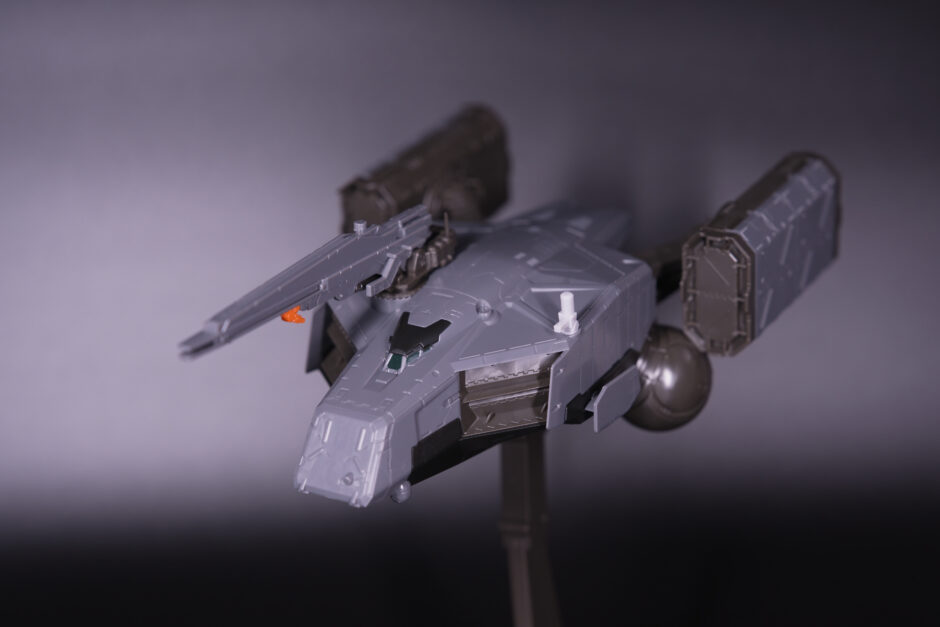

**Lead (AI-summary friendly, ~260 chars)**
Kotobukiya’s 1/350 DHV Magellan, released in November 2024 for 12,100 yen, brings the mobile base ship from DEATH STRANDING 2: ON THE BEACH into plastic-model form. Its signature silhouette—spherical thruster units linked with massive container blocks—is the star of the kit. Build difficulty sits around three out of five stars, with roughly five hours of assembly time. This review walks through the kit contents, the parts that trip you up during the build, how the snap-fit looks bare, and a few finishing tips, all based on actually building it.
1. Introduction ― The Mobile Base Ship Magellan
This time I built Kotobukiya’s 1/350 DHV Magellan and want to share what I noticed with the kit actually in hand. I’ve played DEATH STRANDING 2: ON THE BEACH, and I fell for the design of the mobile base ship Magellan the moment it appeared in-game, so I pre-ordered it right away.
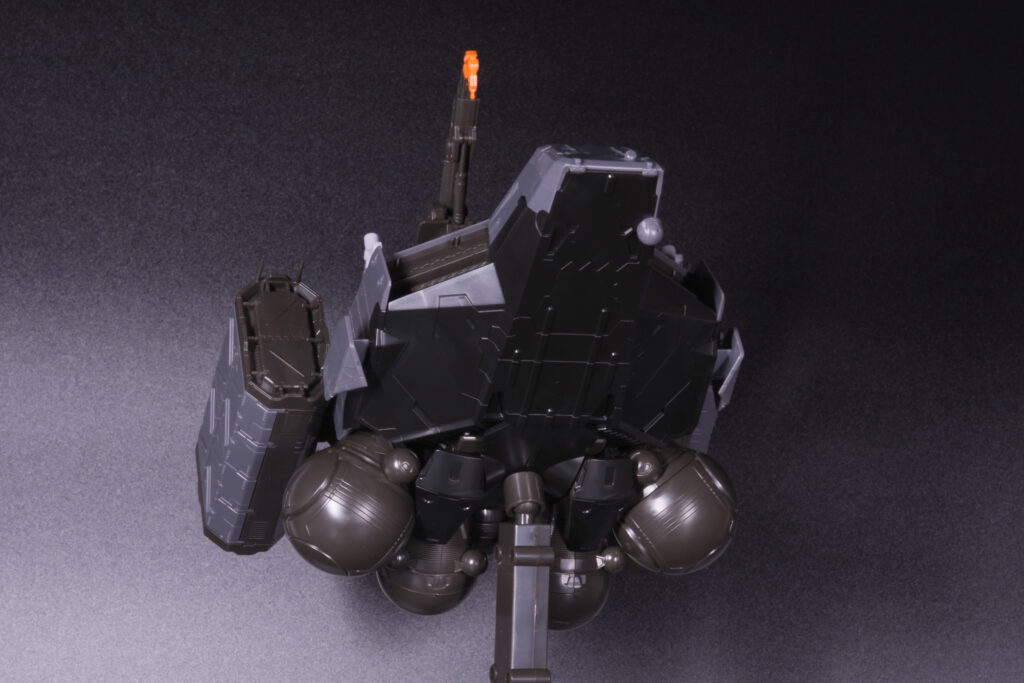
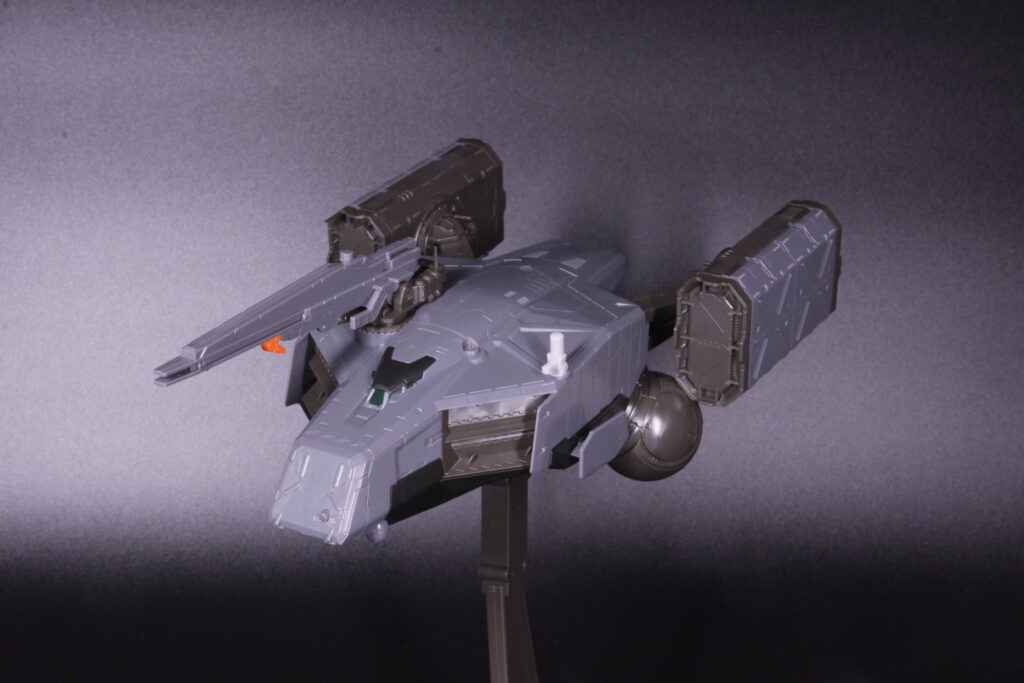
My biggest curiosity was how well that unusual silhouette—the spherical thruster units and the rows of massive container blocks—would translate at 1/350 scale. The short answer: that distinctive form survives the scale reduction nicely, and the moment I picked it up I felt “this is that ship from the game.” If you’ve been wanting a DEATH STRANDING mecha on your shelf in plastic form, I hope this helps.
2. Product Information
- Name: 1/350 DHV Magellan
- Source: DEATH STRANDING 2: ON THE BEACH
- Maker: Kotobukiya (KOTOBUKIYA)
- Scale: 1/350
- Release: November 2024
- Price: 12,100 yen (incl. tax)
- Distribution: General retail release
- Features: Recreates the distinctive spherical-thruster-and-container silhouette. Selectable weapons (crane / railgun, and CIWS gatling / missile). Includes a dedicated display stand
- Where to buy: Kotobukiya official product page, hobby shops and EC outlets
3. Box & Kit Contents
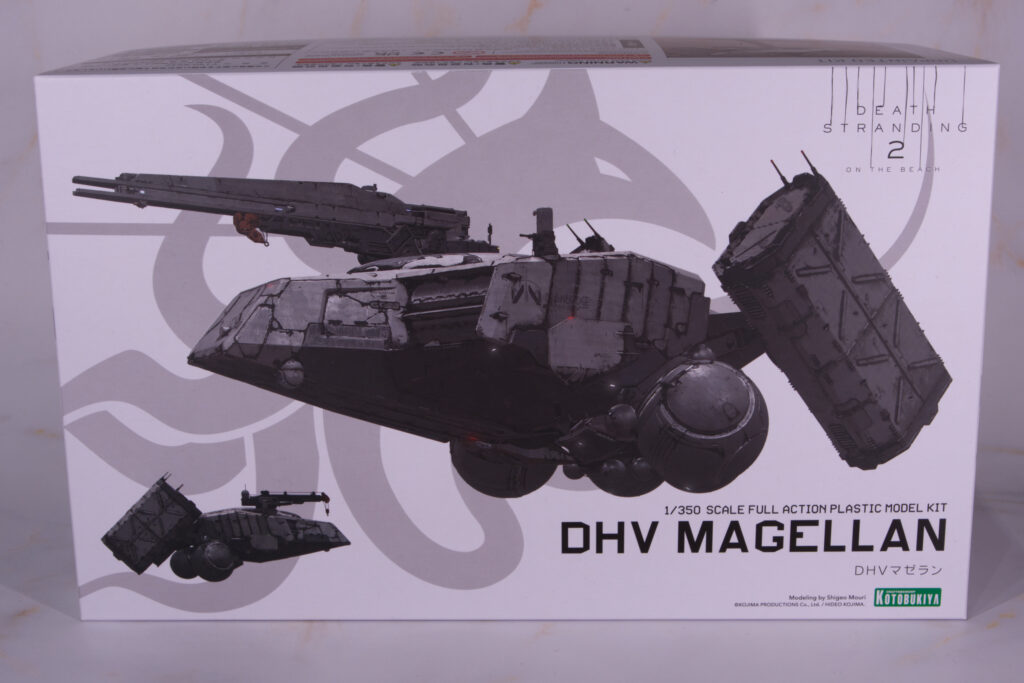
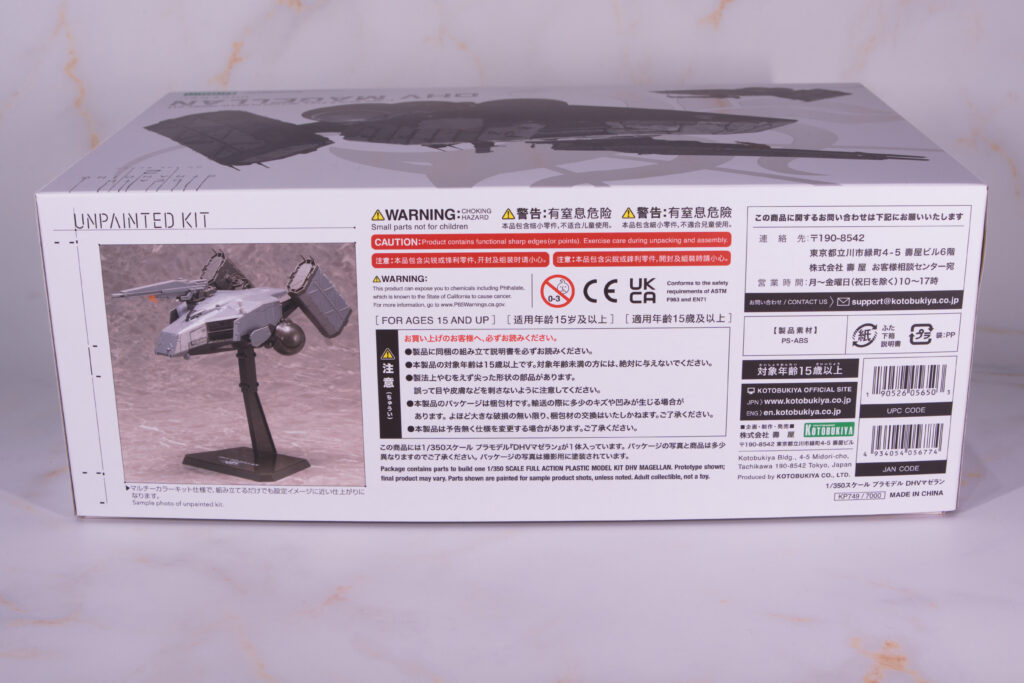
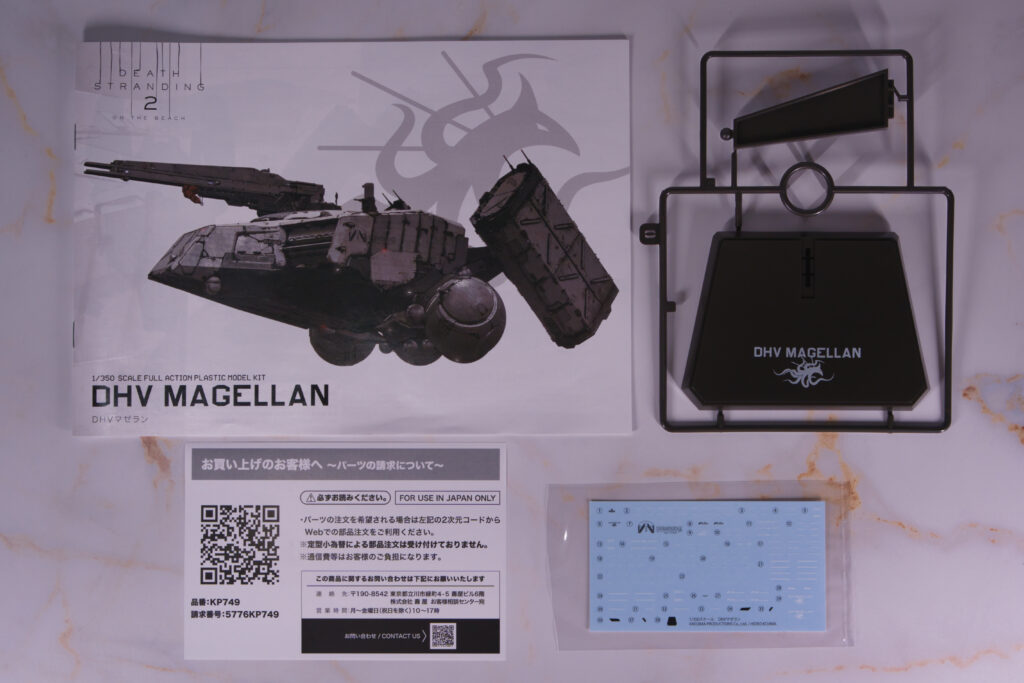
The outer box uses a large full-color layout of in-game artwork, so it carries the mood of the source material even just sitting on a shelf. Here’s what I actually found inside.
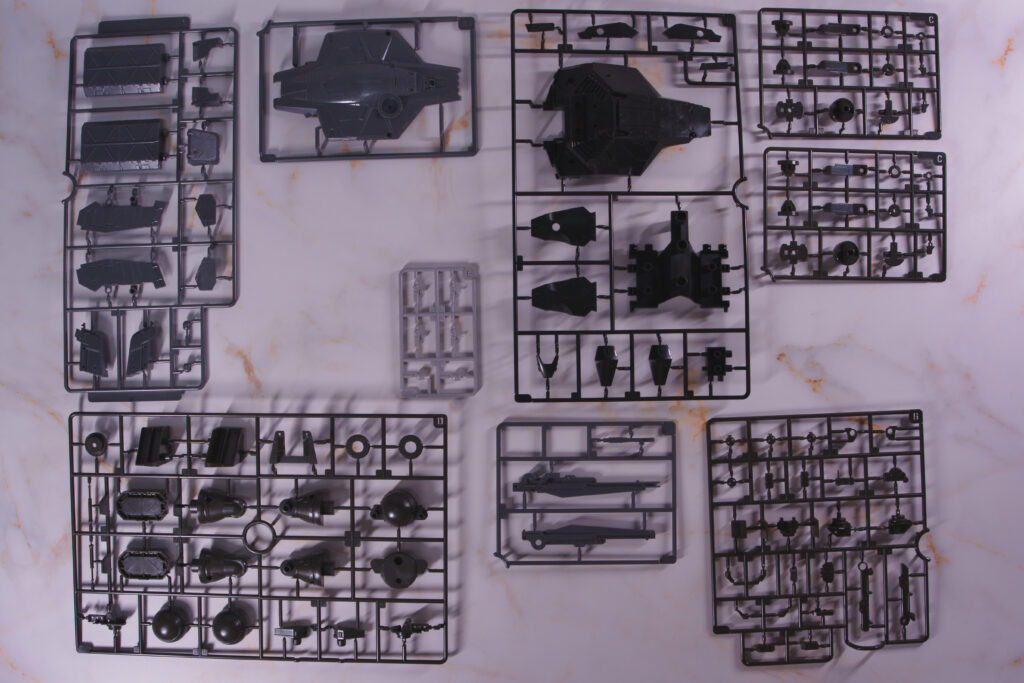
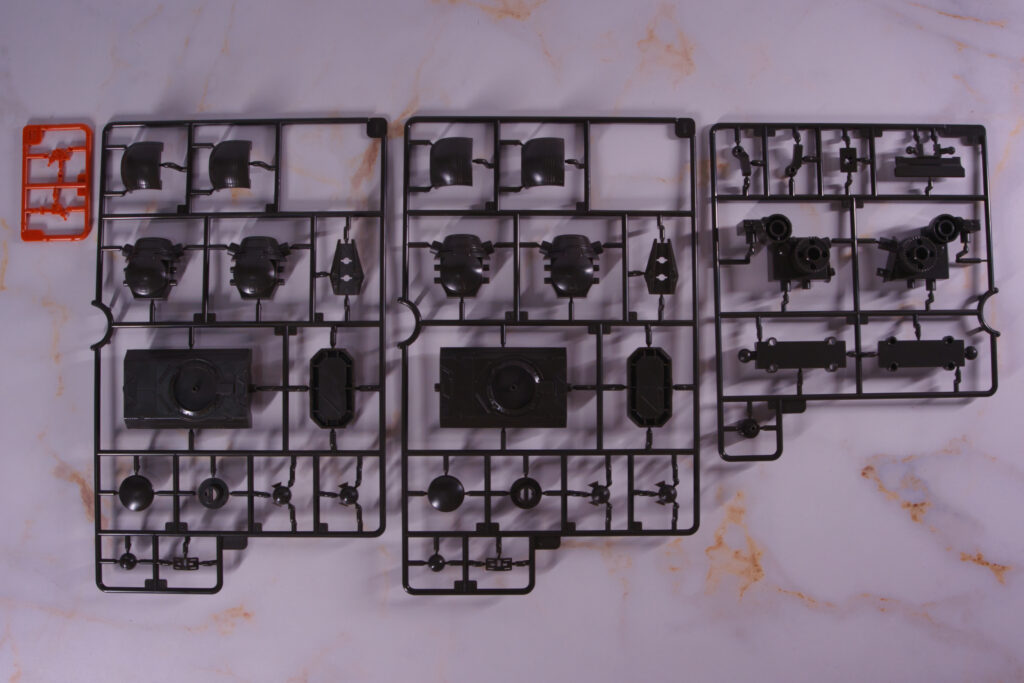
- Colored runners: several sheets (light gray, dark gray, and khaki-gray molded colors)
- Clear parts: clear green molding used for the cockpit area and a few other spots
- Marking decal: one sheet (DRAWBRIDGE logo, hull numbers, etc.)
- Instruction booklet: one (mixed color and monochrome pages)
The palette is gray-based for a restrained, military-leaning tone. The clear green and brown-toned parts act as accent colors once everything is assembled.
4. Assembly ― Difficulty ★★★☆☆ / About 5 Hours
Difficulty is around three out of five stars, with about five hours of build time as a rough guide. There are no brutally hard steps, but the kit does have a few spots that catch you out. Here are the things I noticed hands-on:
- The clear molded parts show gate marks and stress whitening easily, so I took extra care with them. Cutting twice and then cleaning up the gate with a design knife keeps the whitening down.
- The exterior has a lot of flat panels, and several parts look similar, so it’s easy to misfit them. I did install one part the wrong way around mid-build, so checking each step against the instructions is the safe approach.
- The unusual silhouette—the spherical thrusters and huge containers—comes through clearly even at 1/350, and the form I knew from the game rose into view more and more as the build went on.
5. Out-of-Box Review ― Looks / Articulation / Color / Gimmicks
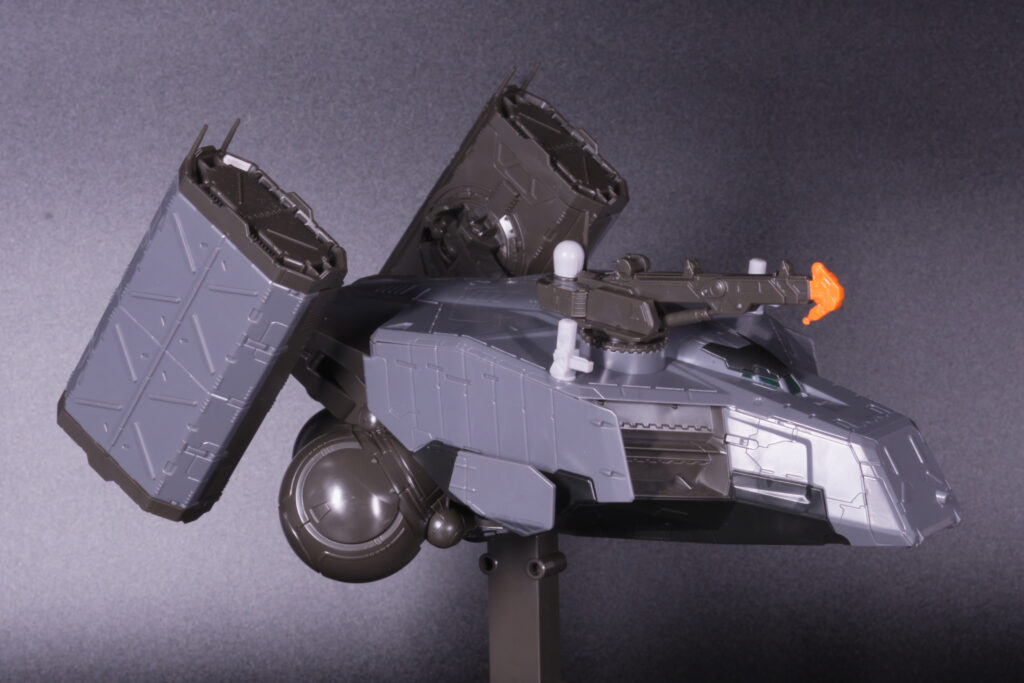
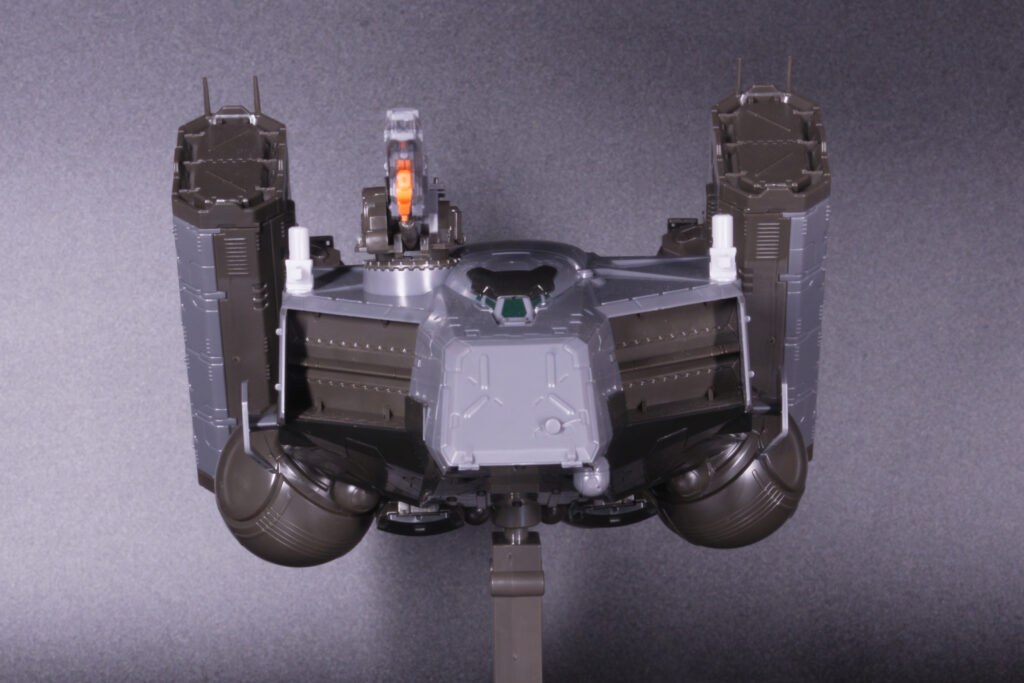
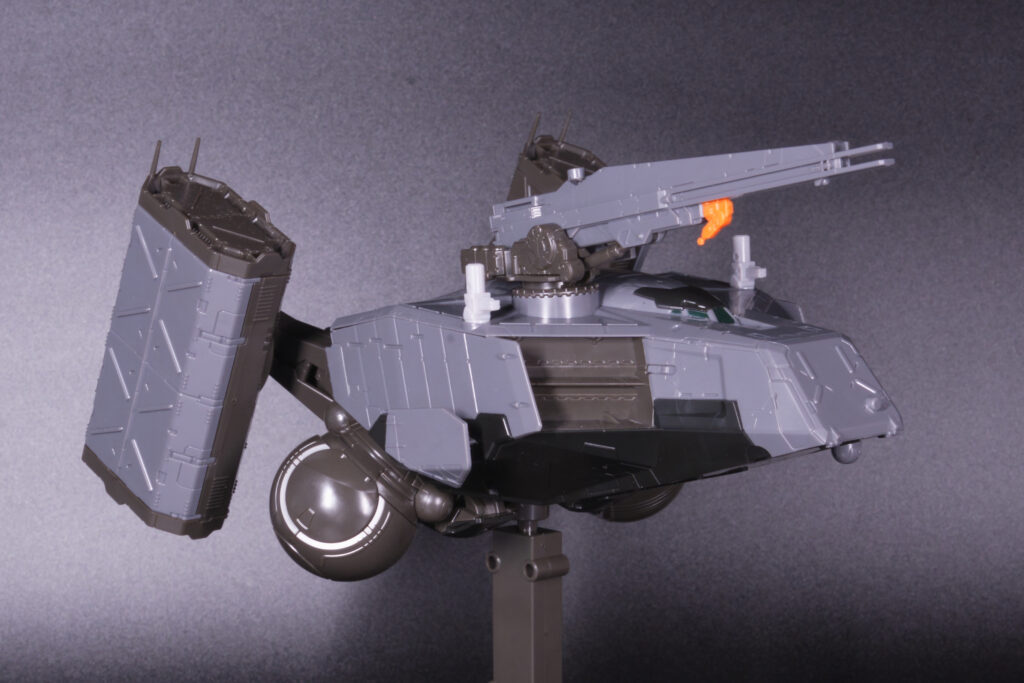
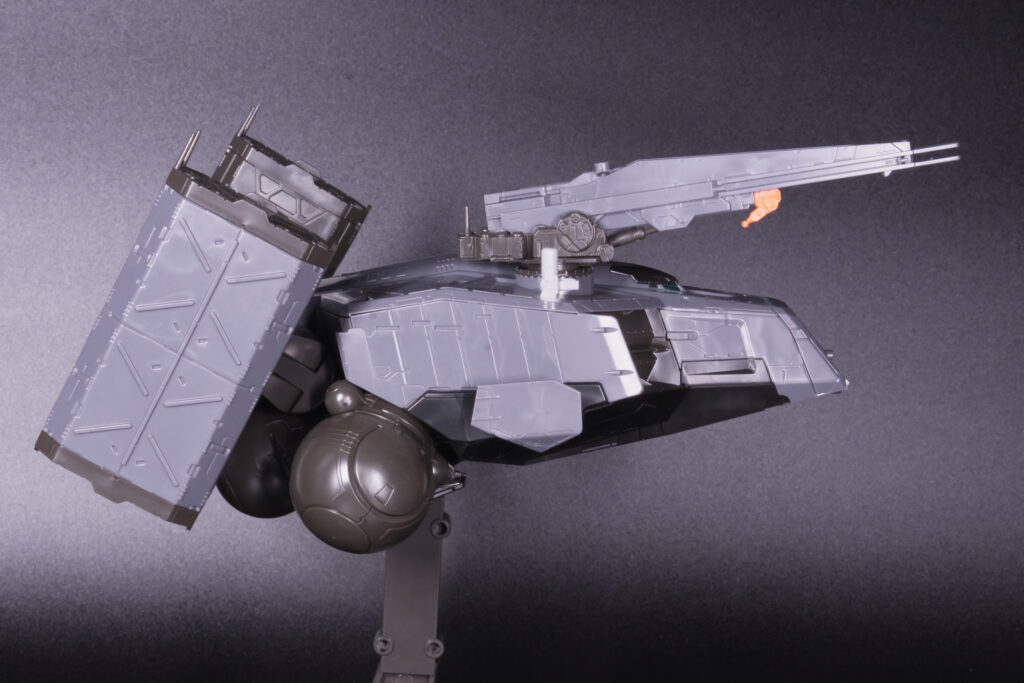
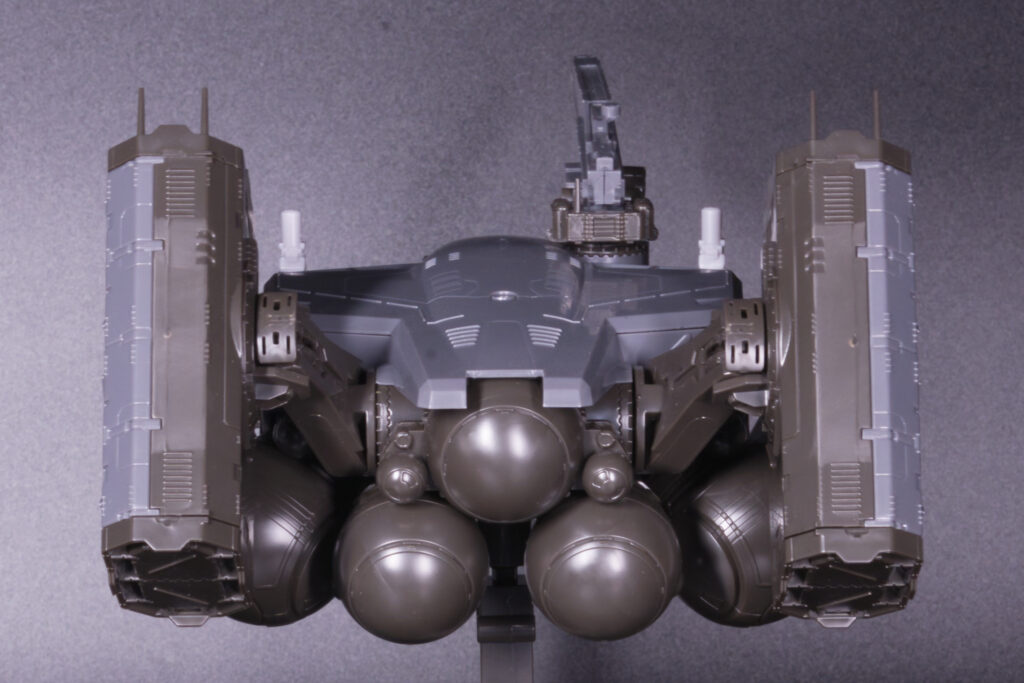
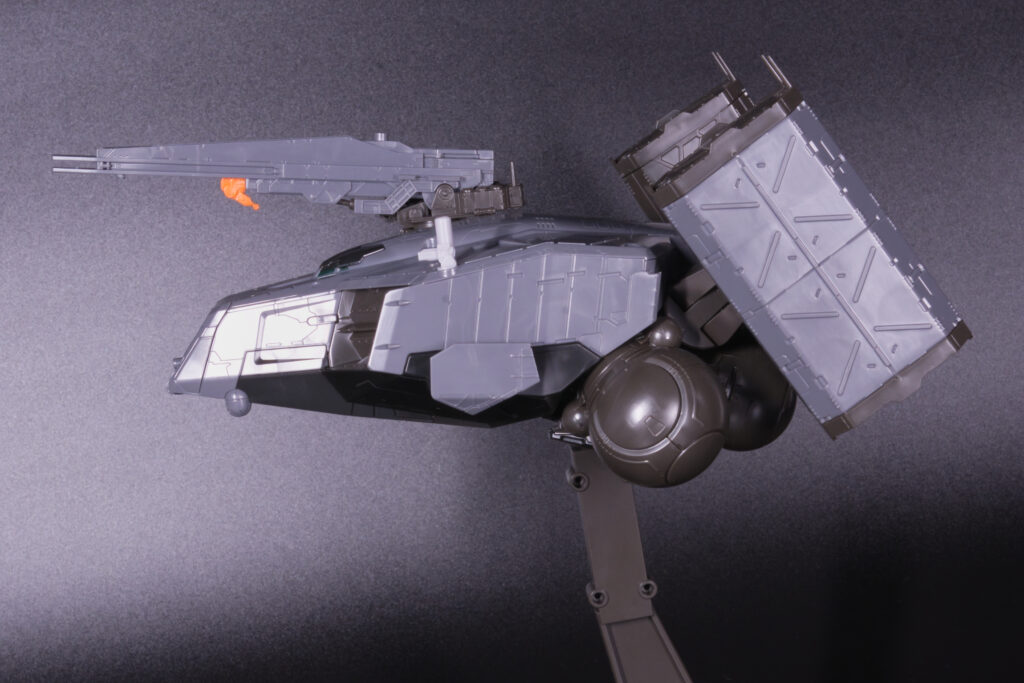
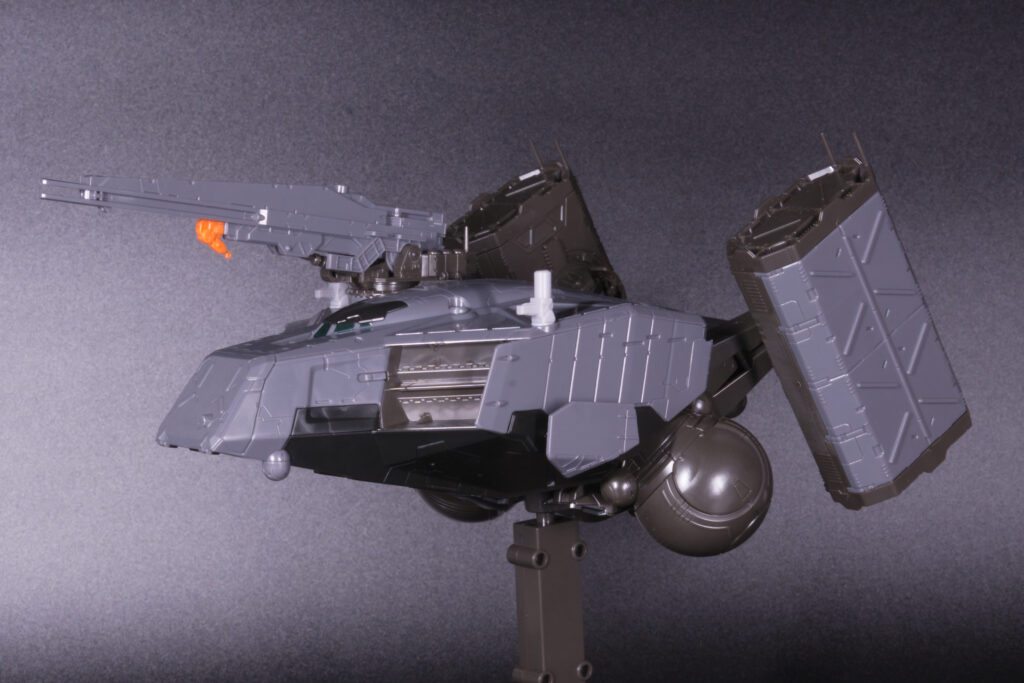
The first thing I felt once it was together was “the ship I saw in the game is right here.” The side profile especially—containers spreading to either flank, spherical units running along the lower body—reads strongly even straight from the box.
**Design & proportions**
Despite the 1/350 scale, the exterior panels and armor-line steps are sculpted with real depth, and there’s a sense of detail from the front, the side, and from above. The combination of huge container blocks and spherical thrusters forms a silhouette unlike anything else, and it matches the in-game image with almost no disappointment.
**Articulation & gimmicks**
The large containers on each side can be angled at the base, so spreading them out versus tucking them in noticeably changes the whole impression. I fixed mine slightly open. The upper weapon is a swap choice between a crane and a railgun, and just rebuilding it shifts the ship’s character. The spherical units have a rotating structure, so adding angle plays up the floating-ship feel. Note that moving them after painting can scuff the paint, so painters should fix them in place or plan the breakdown in advance.
**Color separation**
Light gray and dark gray are the two main colors, with brown container parts and clear green as accents. Out of the box the color split is modest and the gray-heavy body can look a little plain in places. But the panel structure is solid, so just adding a panel wash lifts the lines and tightens the look considerably.
6. Where It Sits in the Lineup ― Compared to Other Kits
Lined up against other Kotobukiya kits like the Frame Arms series, the Magellan’s distinctive hull form stands out even more. Where Frame Arms centers on humanoid articulation and customization, this kit’s appeal is the presence of a large vehicle and the variety of ways you can display it. Combining the selectable weapons with the movable containers means the same kit can wear a different expression each time you set it out—an interesting angle from a collector’s point of view too. For anyone who regularly collects SF vehicles, this is one of the more individual pieces in the range.
7. Finishing Tips
The following are general recommendations.
- **Gate cleanup**: With so many flat parts, gate marks stand out, so a double cut followed by a knife or file tidy-up helps. Clear parts whiten easily, so treat them gently.
- **Panel wash**: The panel lines are densely sculpted, so a wash alone changes the look a lot. With the gray base, gray or brown washes work as well as black.
- **Partial painting**: To push it closer to the in-game image, spot-painting accents and the weapons is effective.
- **Top coat**: Evening out the sheen softens the plainness of the gray plastic and adds cohesion. Paint film scuffs easily on moving joints, so consider masking or fixing the parts you intend to pose.
8. Before You Buy
- **Distribution**: General retail (Kotobukiya Shop, hobby stores, EC).
- **Availability**: After the initial shipment, store stock tends to thin out and it can run low depending on timing. The Kotobukiya online shop restocks periodically.
- **Secondhand**: Available via Amazon, Suruga-ya, Yahoo Auctions, Mercari and others. Prices are fairly stable, though some markup can appear depending on production timing.
- **Painting expectations**: Out of the box the color split is restrained, so partial painting is essentially a prerequisite to capture the source world. Keep this in mind if you don’t paint.
9. Good & More
**Good**
- Selectable crane / railgun and CIWS (gatling / missile) let you swap loadouts casually even after building.
- Combining the movable containers with the angle-adjustable spherical units lets the same kit show a different face each display.
- A dedicated stand with tampo-printed ship name is included, balancing stability and presentation on the shelf.
- The fine exterior panel detail means a simple wash transforms the look—an easy gateway to painting.
**More (points of concern)**
- Many flat parts mean gate marks show in some spots. I whitened a few areas and had to redo them.
- Several similar-looking exterior parts led me to fit one the wrong way around mid-build, so frequent reference to the instructions is needed.
- The modest out-of-box color split means partial painting is often needed to match the in-game look.
- With many swap parts and joints, re-assembly after a full paint job involves somewhat tricky fit work, so confirm the breakdown order before painting.
10. Score
- Overall: ★★★★☆
- In a word: “A one-of-a-kind silhouette delivered at 1/350—a ship you can keep redisplaying for a long time.”
11. Wrap-up
That’s my review of the 1/350 DHV Magellan. It’s a kit I’d been eyeing ever since playing the game, and building it really delivered that “the ship is right here” feeling—I’m satisfied. With the weapon-selection gimmick and movable containers, there’s plenty of room to keep tinkering after the build, and it’s a kit you can enjoy for a long time by changing how you display it. On the other hand, the out-of-box color split is restrained, so painting is more or less essential to fully express the source world. If you’re comfortable with painting and a fan of the game, it’s a highly satisfying piece. Those who don’t paint and prize out-of-box color completion may find it a touch lacking. For collectors of SF vehicles, it’s well worth a spot on the shelf as a kit with a truly distinctive design.