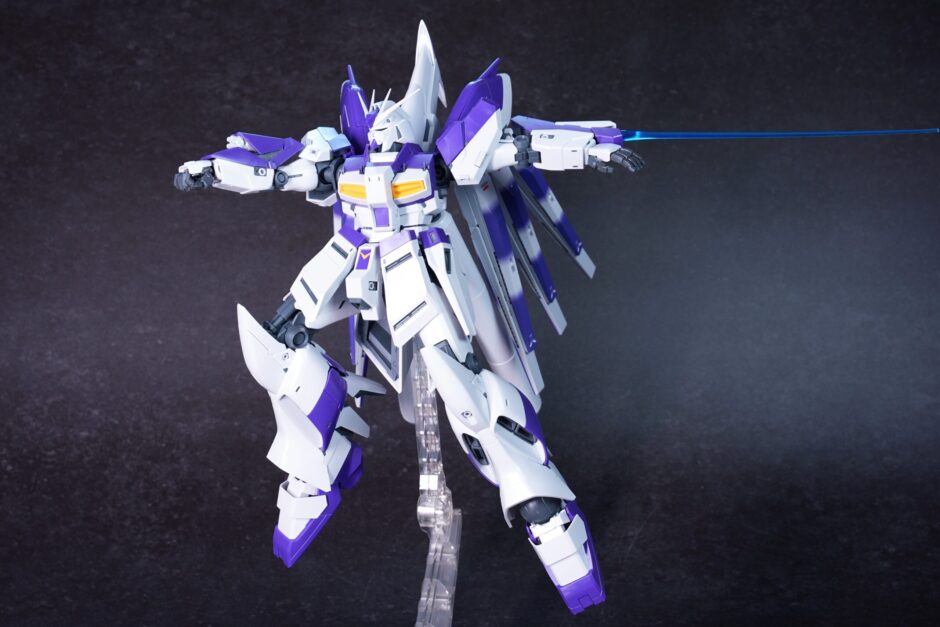

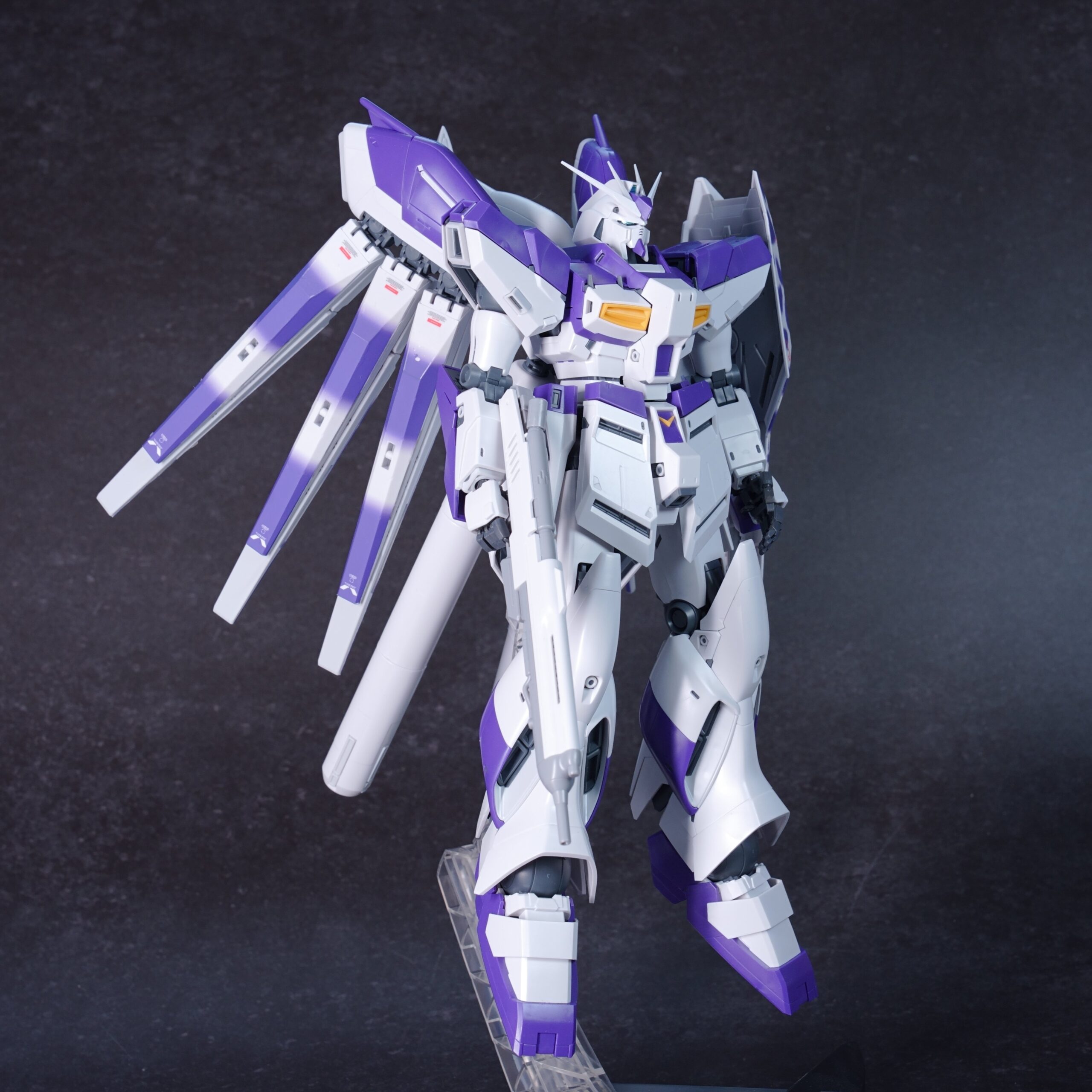
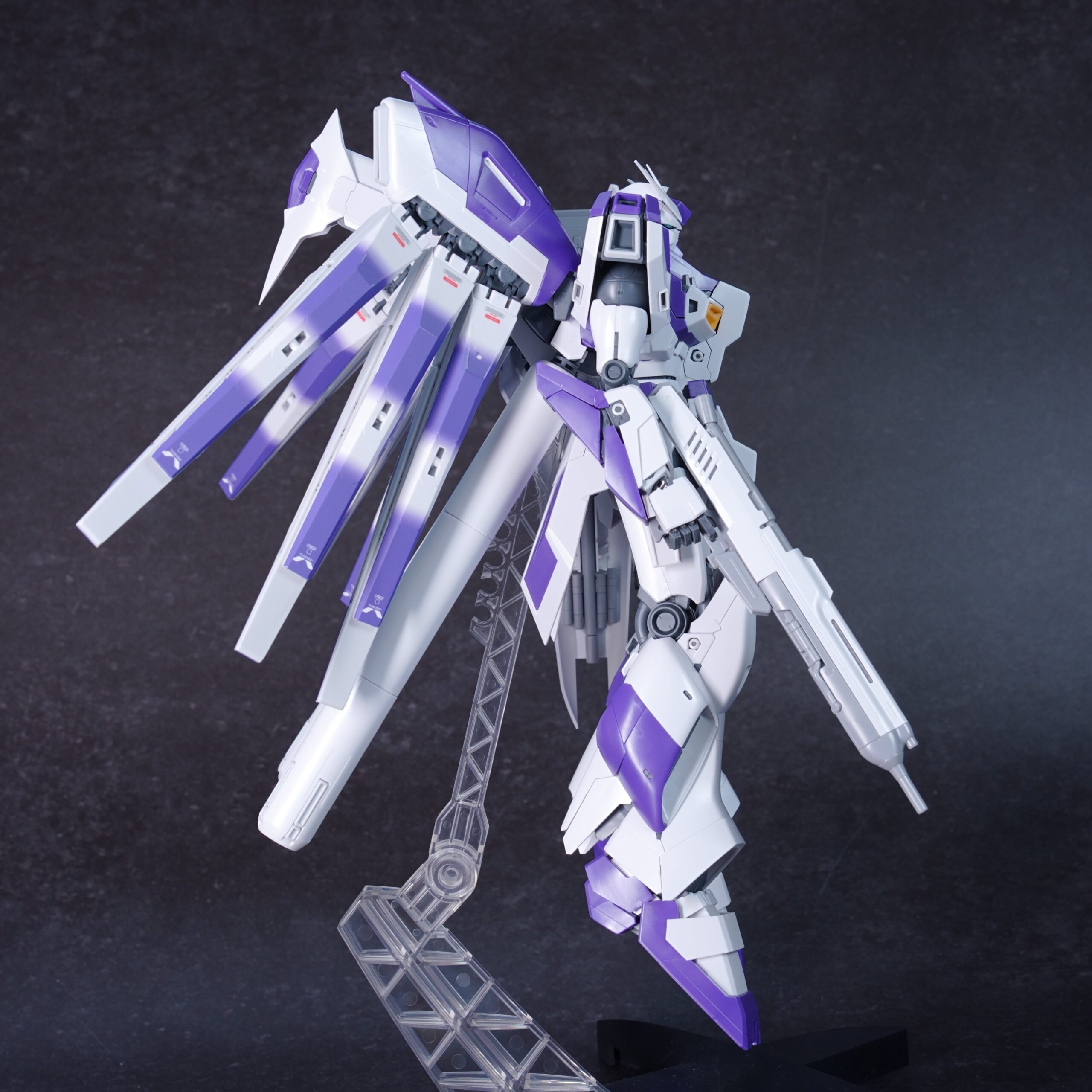
This is a hands-on review of the MG 1/100 Hi-Nu Gundam Ver.Ka (Hi-νガンダム Ver.Ka). It reconstructs Amuro Ray’s final machine from the novel Char’s Counterattack: Beltorchika’s Children into a modern silhouette by Hajime Katoki. This time I went with an unpainted straight build, and assembly took about two hours. Beyond how it feels to reach completion, I’ll share concrete caveats I only discovered after building — the tricky balance caused by the large propellant tanks that jut out to the rear, the huge quantity of decals that are traditional for Ver.Ka, and the holding strength of the included stand that supports the six funnels. The idea is to let anyone about to pick up this kit understand the easy-to-trip-over points in advance.
1. Introduction ― About the Hi-Nu Gundam Ver.Ka
The Hi-Nu Gundam is the machine Amuro Ray pilots in the novel version of Char’s Counterattack. Compared with the Nu Gundam of the animated work, this is a heavily armed specification fitted with large propellant tanks and funnels. This kit brings that design together in a massive yet precise form as part of the Ver.Ka brand, courtesy of Hajime Katoki. The highlight is how the fine detail characteristic of Ver.Ka coexists with a modern, more elongated proportion.
2. Product Information
- Release date: August 30, 2014
- Price: 8,140 yen (tax included) / 6,000 yen (tax excluded) at launch
- Contents: 26 molded-part runners + slide decals + foil stickers
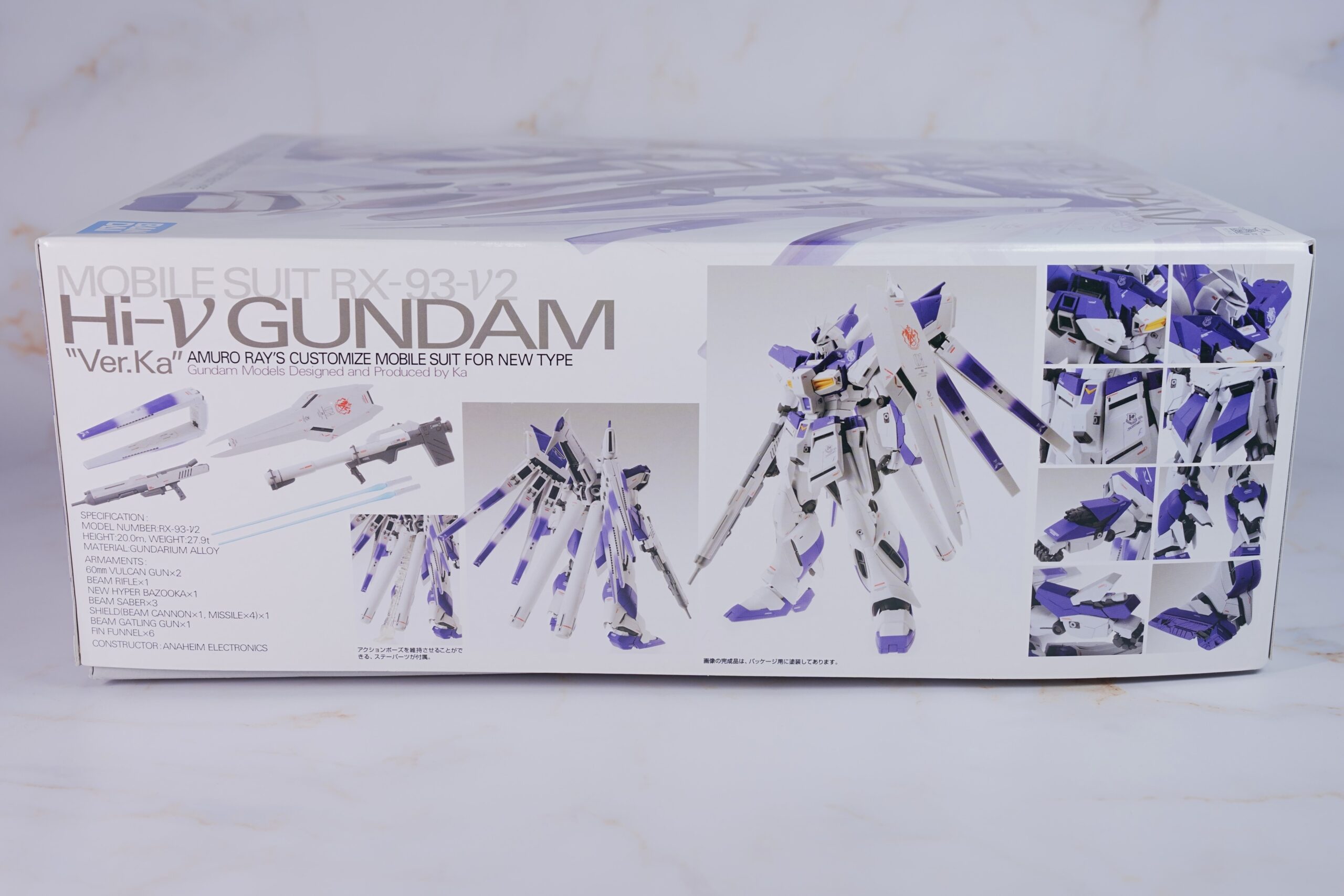
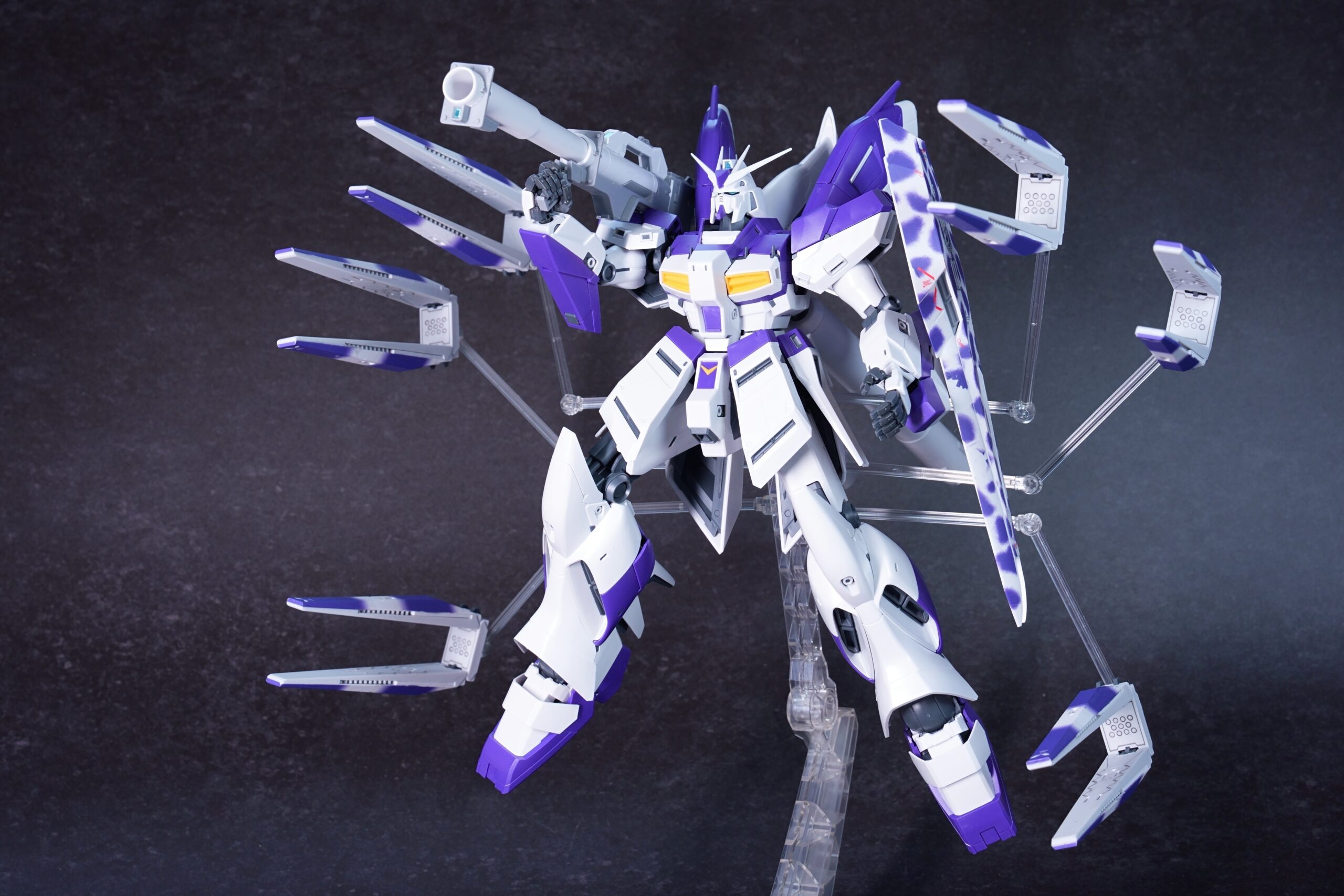
- Gimmicks: LED unit compatible, hidden arms in the forearms, movable thrusters, six funnels + deployment stand included
- Official: MG 1/100 Hi-Nu Gundam Ver.Ka | Bandai Hobby Site
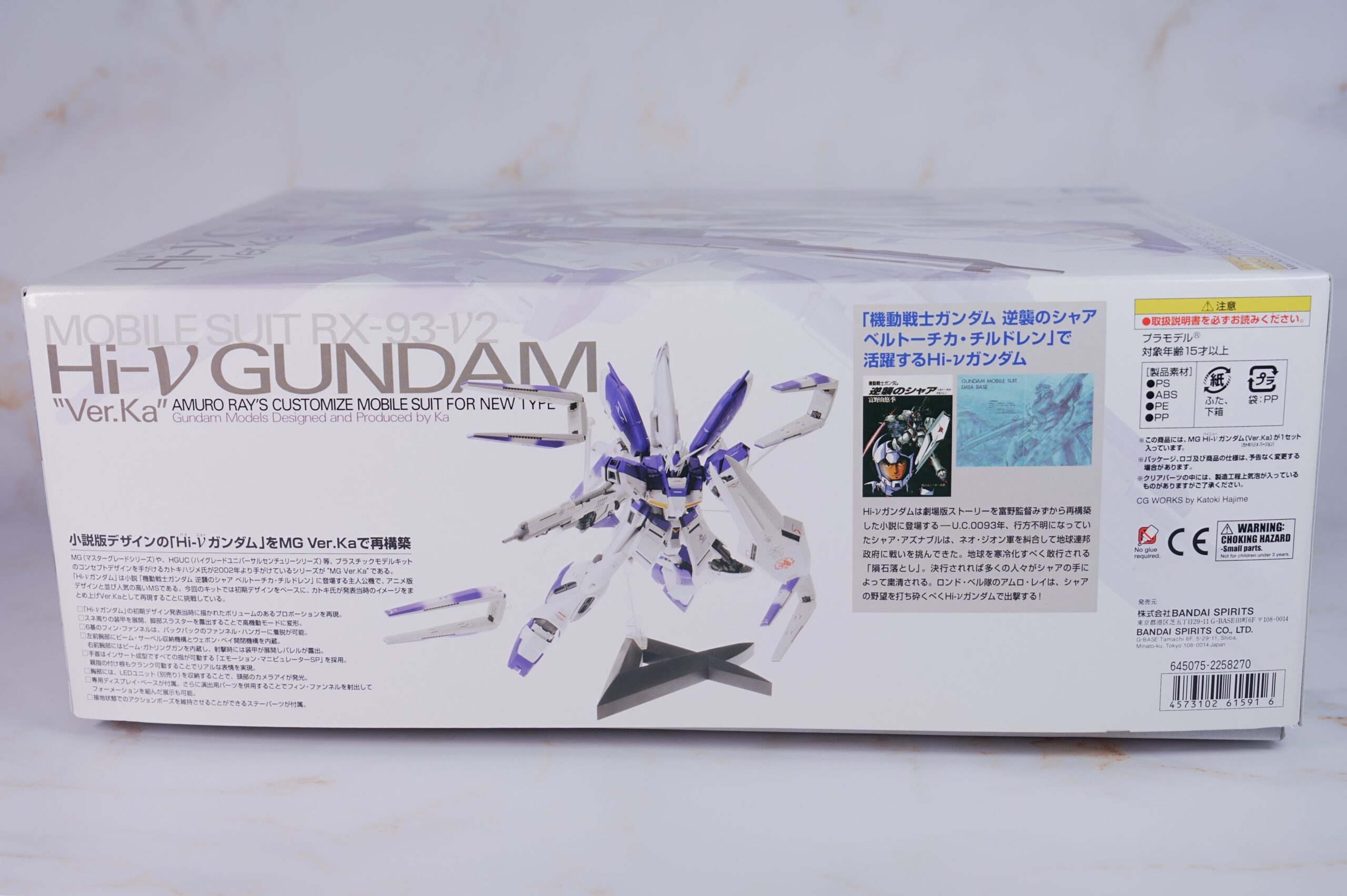
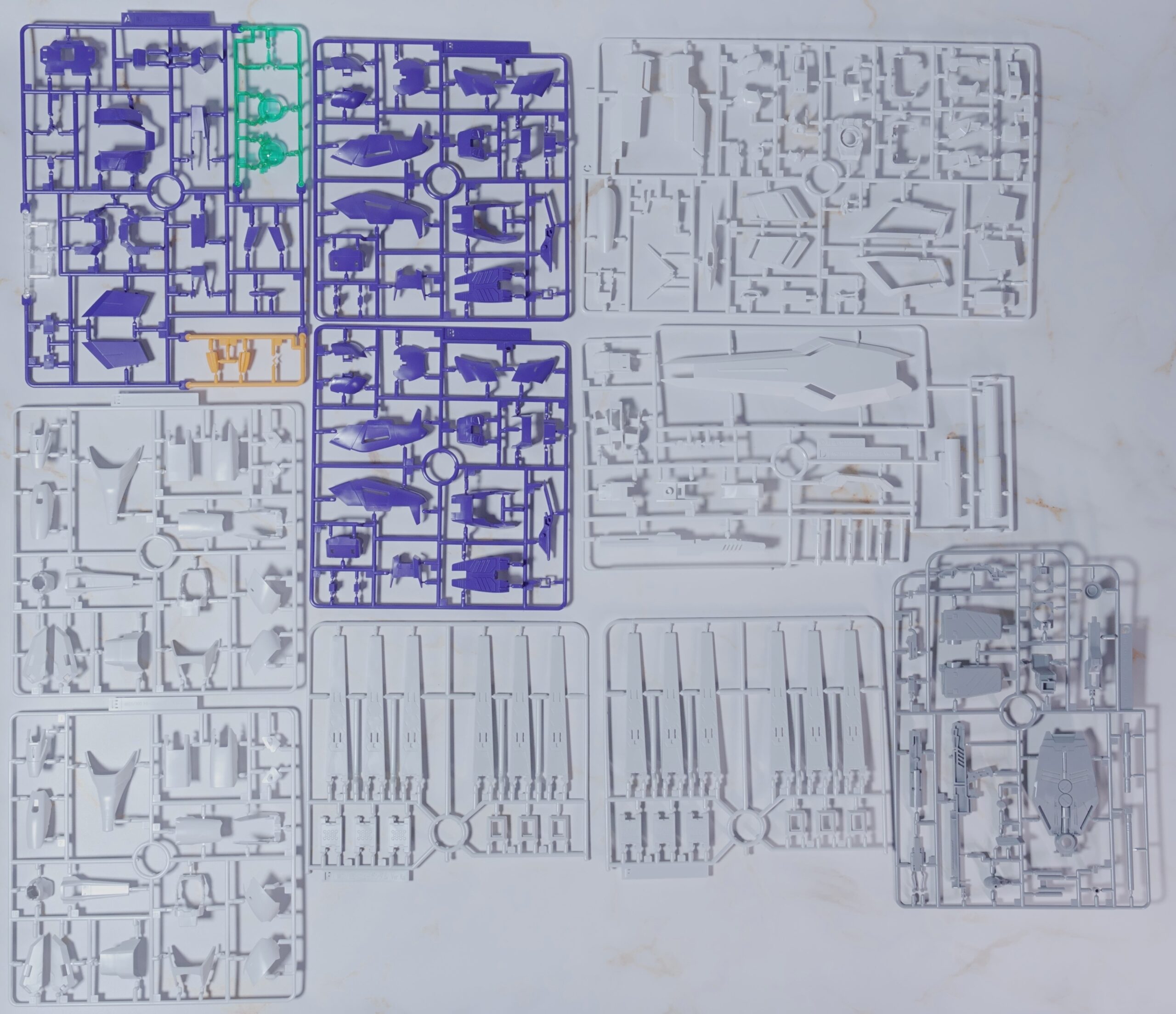
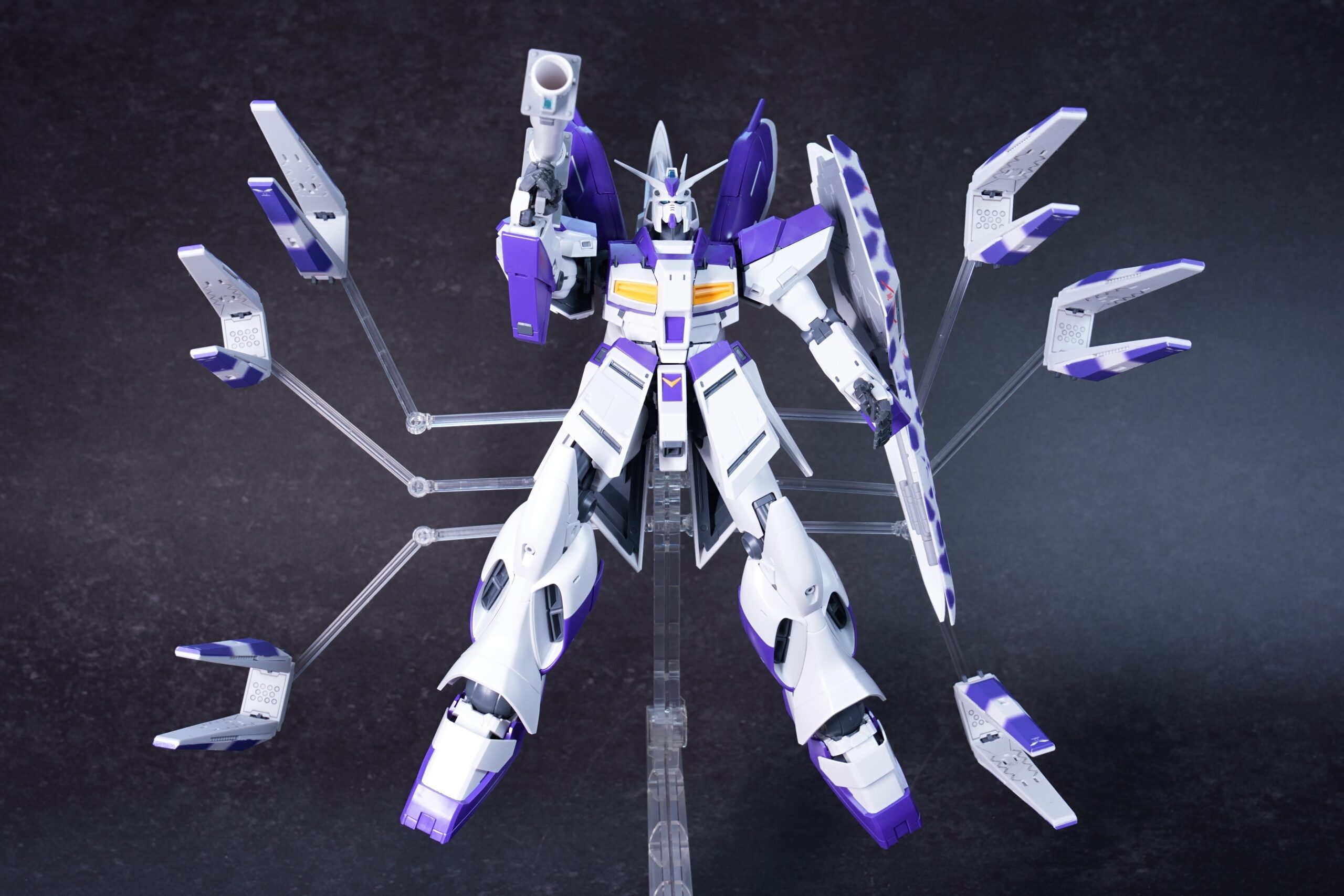
As the count of 26 runners suggests, this is a large-volume kit even among MGs. It’s designed so you can install LED units (sold separately) in the chest and head, the forearms have built-in hidden arms, and the movable thrusters let you add expression to the backpack. A stand for deploying the funnels comes as standard, so it’s a welcome touch that you can recreate the show’s set-piece moments without buying extra parts.
3. Packaging
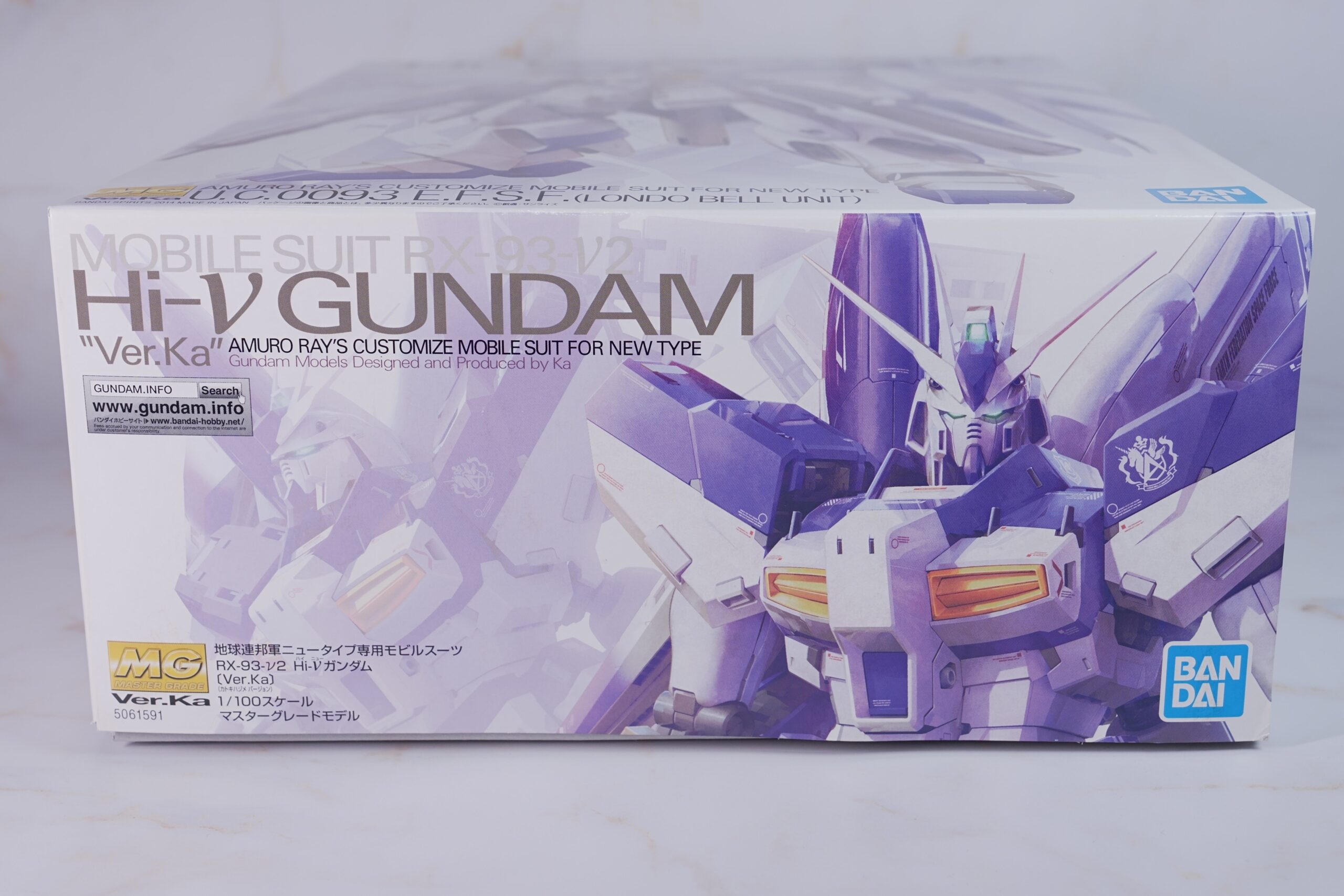
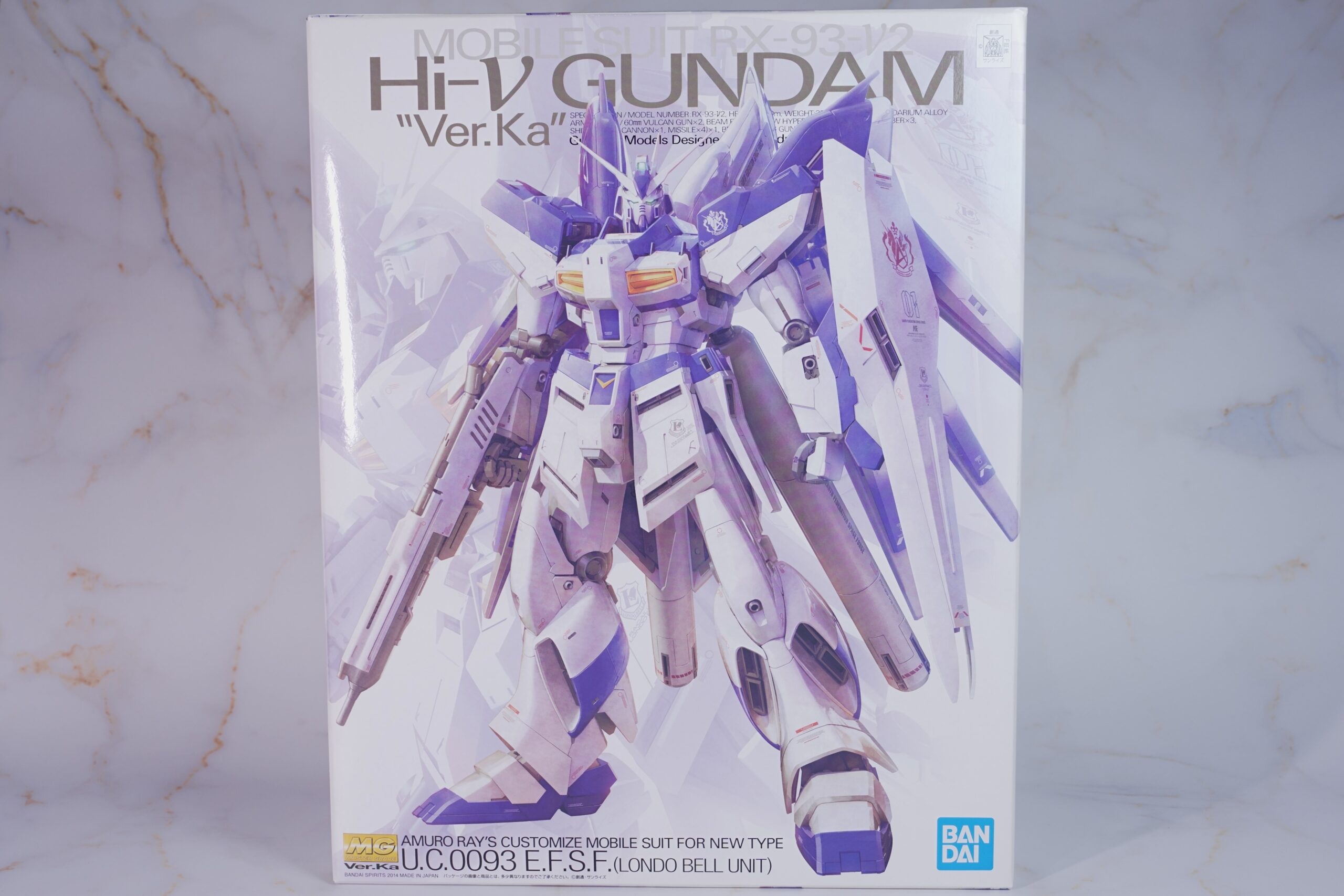
The box is thick and feels heavy in the hand — the sheer amount inside is reflected directly in the weight. Spreading out the runners, the molded colors are split into several tones, and the psycho-frame sections are separate parts in clear red. It’s a configuration where color separation is unlikely to fall apart even with a straight build.
4. Assembly ― Straight Build About 2 Hours, Four Easy-to-Trip Points
This time it was an unpainted straight build, and the assembly itself moved at a good tempo, taking about two hours. But while it “builds up quickly,” there are a few points worth watching if you want to finish it cleanly and keep it on display.
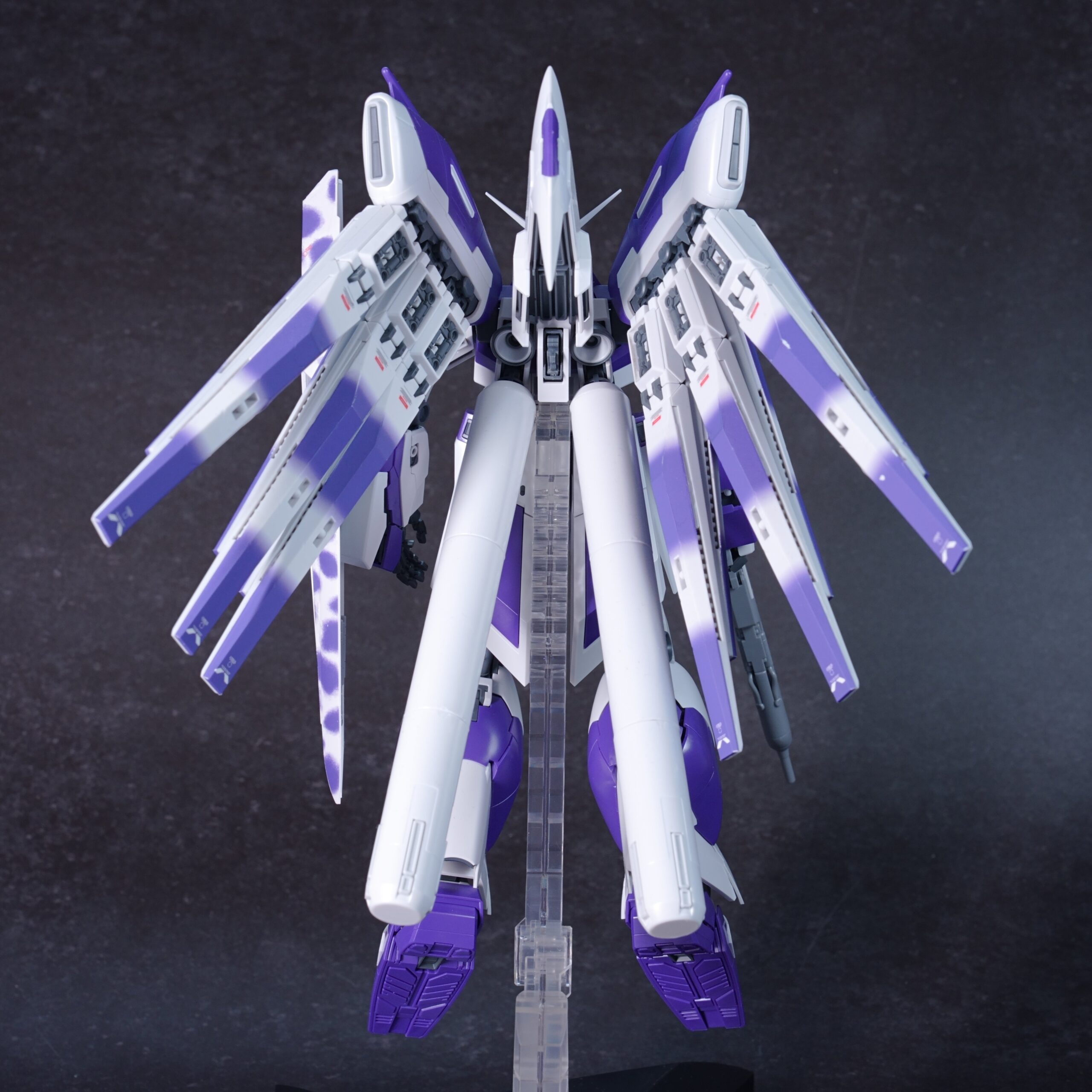
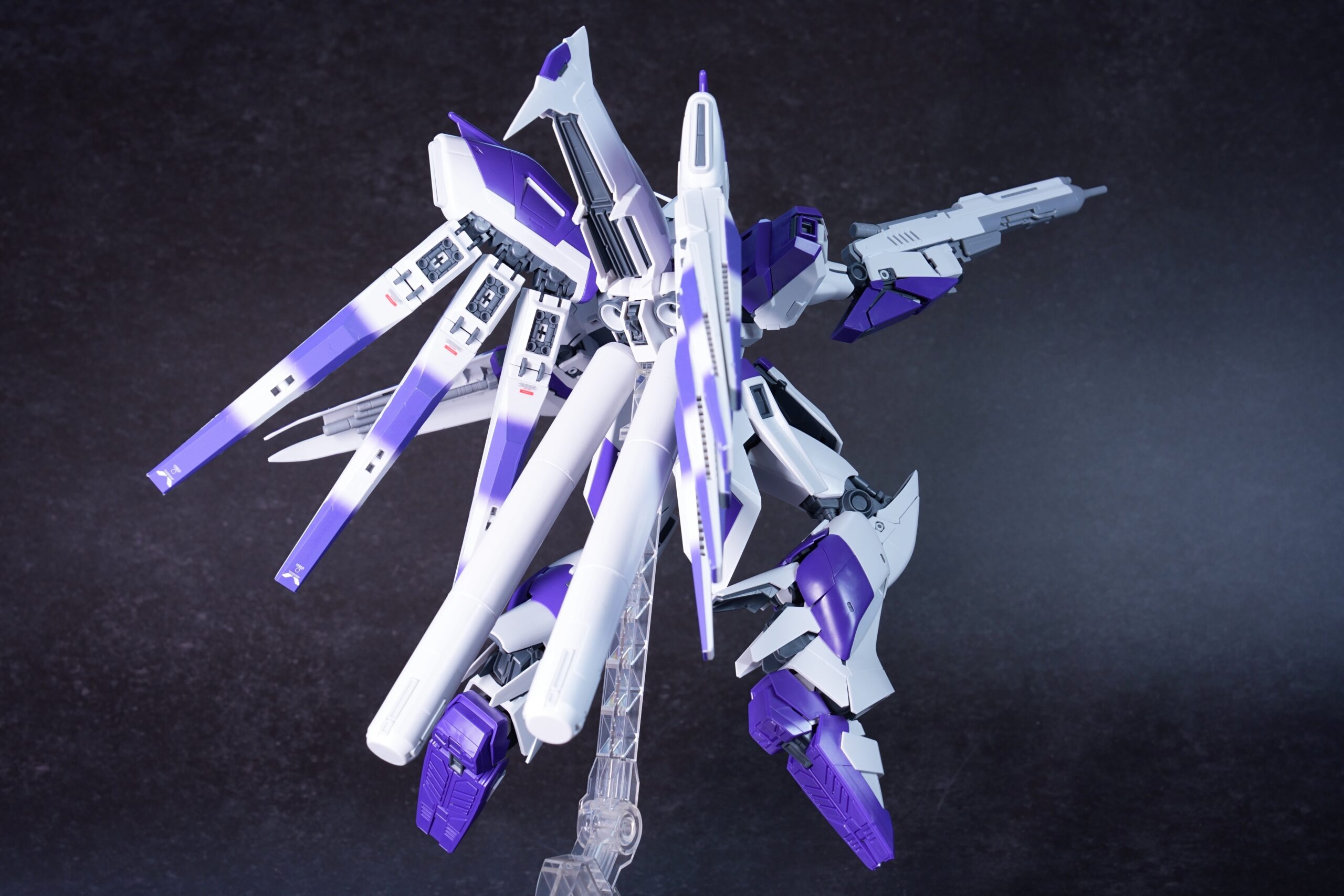
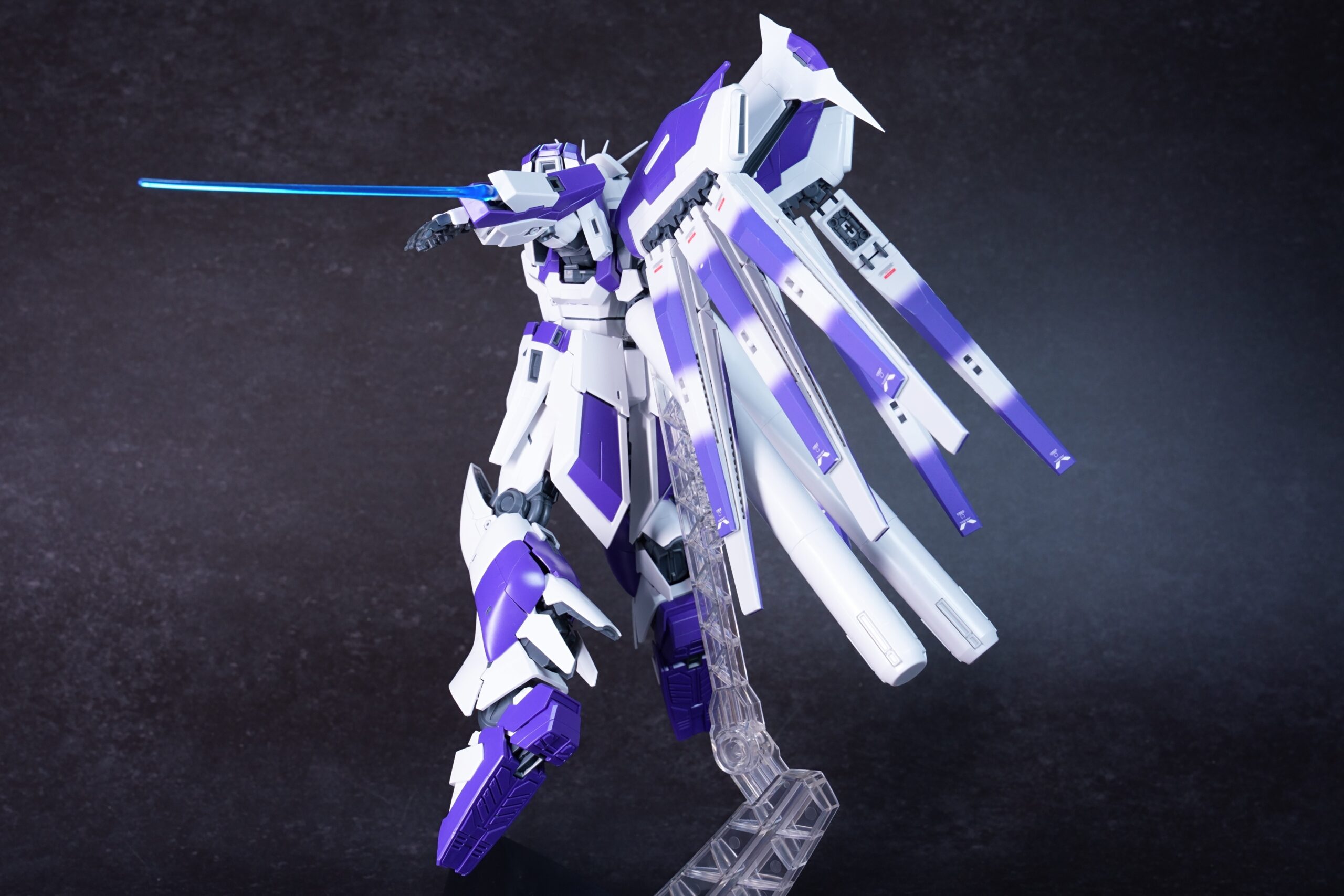
- Rear-heavy balance is tricky: The large propellant tanks and backpack jut out significantly to the rear, so even a plain standing pose gets pulled backward. For stable display, it’s fair to assume the included stand is a prerequisite.
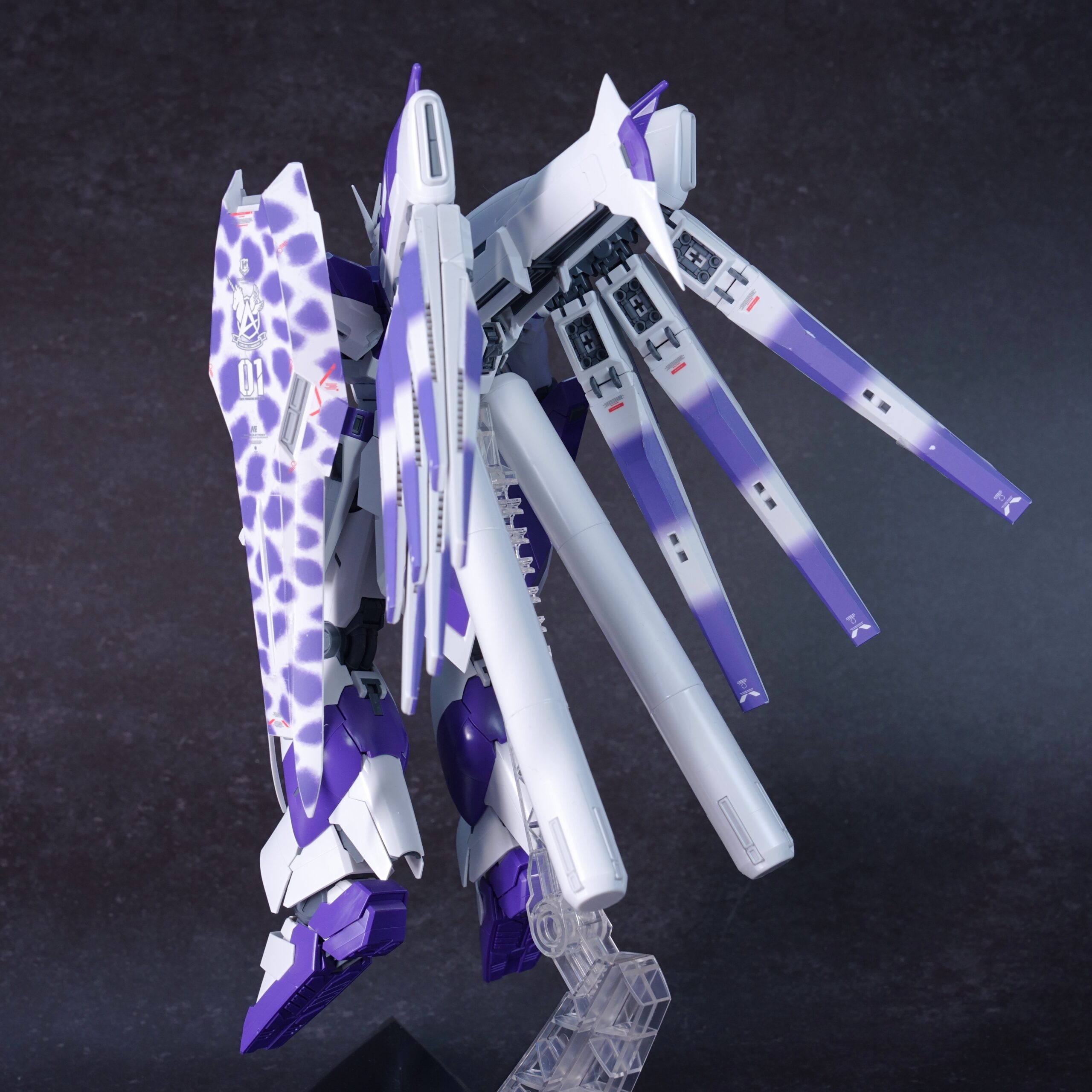
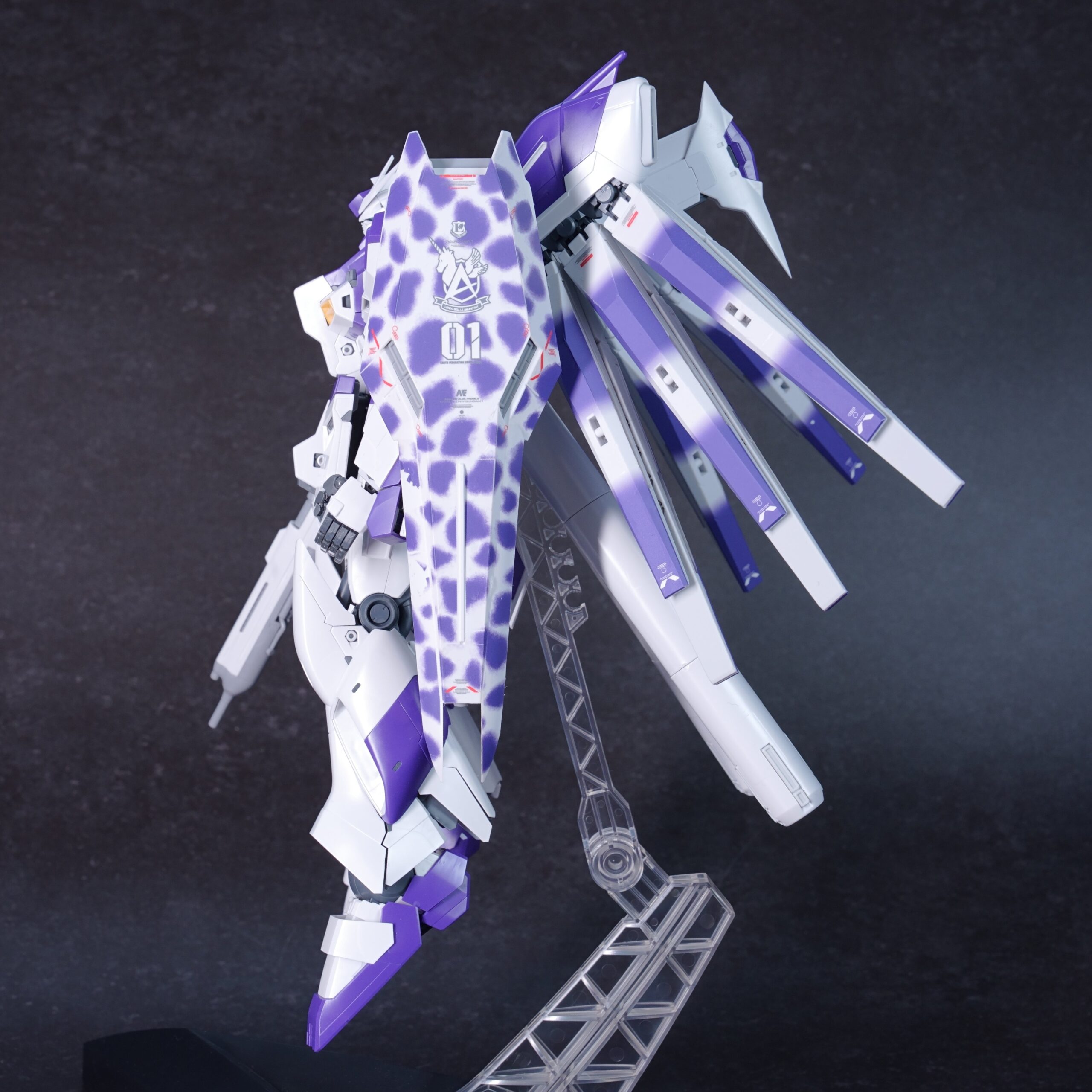
- Lots of decals, and the funnel ones lift easily: The water-slide decals traditional to Ver.Ka are numerous, and applying them all becomes a task of several hours on top of the assembly. The funnel decals in particular don’t size well against curved surfaces, and where applied they tend to lift or peel. If that bothers you, it’s also valid to skip forcing them on and replace them with painted color separation.
- The included stand’s arm is thin: This is the set-piece of deploying all six funnels, but the supporting arm is thin, so holding can be weak or, depending on handling, there’s a risk of breakage. When moving them, be careful of the load on the base of the arm.
- Gate marks on the psycho-frame whiten easily: The clear-molded psycho-frame shows white gate marks prominently, so handle gate cleanup carefully. Trimming little by little with a hobby knife is the safe approach.
- For spots where seam lines appear (around the propellant tanks, etc.), only treat them if they bother you. It looks perfectly good even as a straight build.
The assembly difficulty itself isn’t high, but it helps to plan around the fact that this is the kind of kit where the “time to finish” ends up longer than the “time to build.”
5. Out-of-Box Review ― Massive Legs and the Detail Density of the Funnels
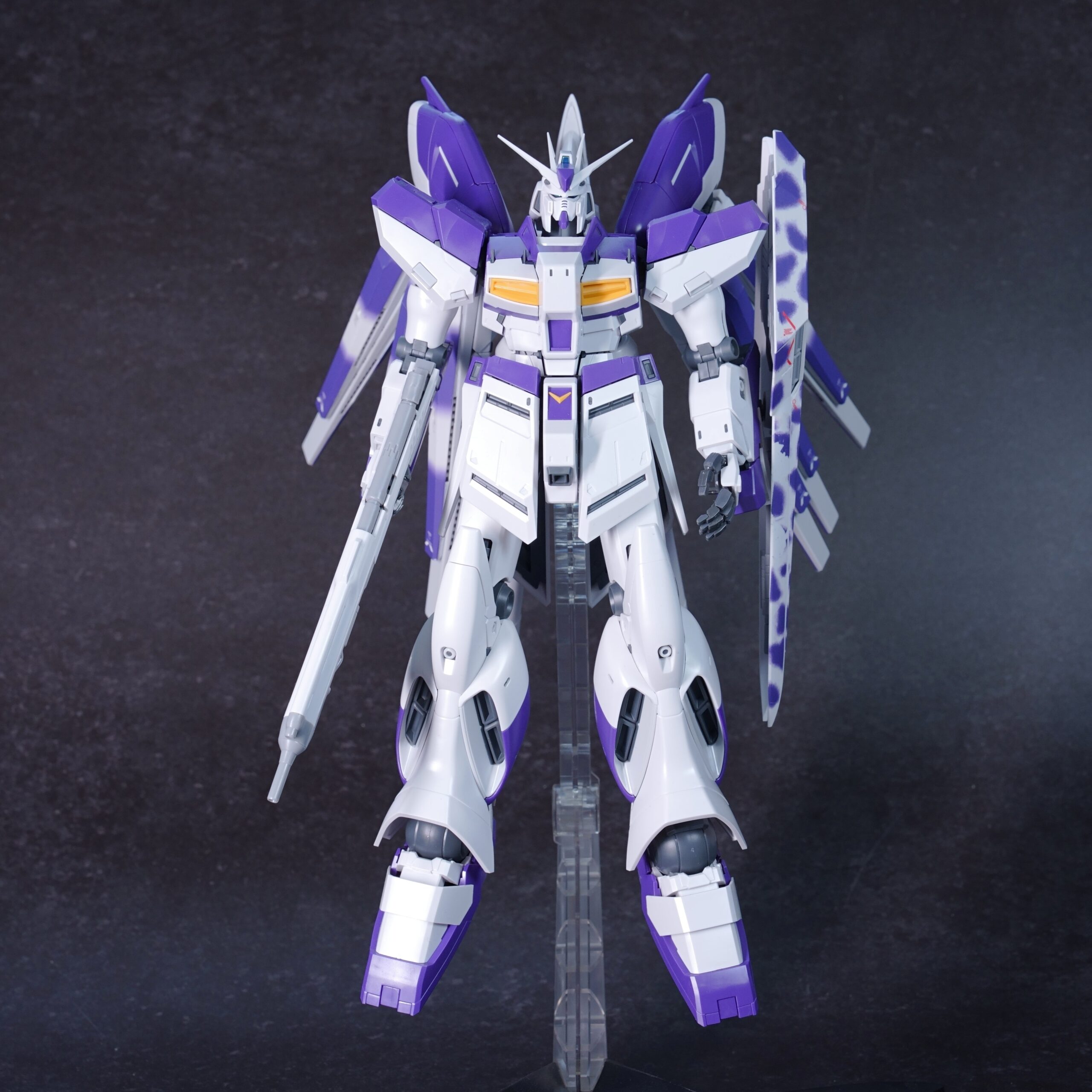
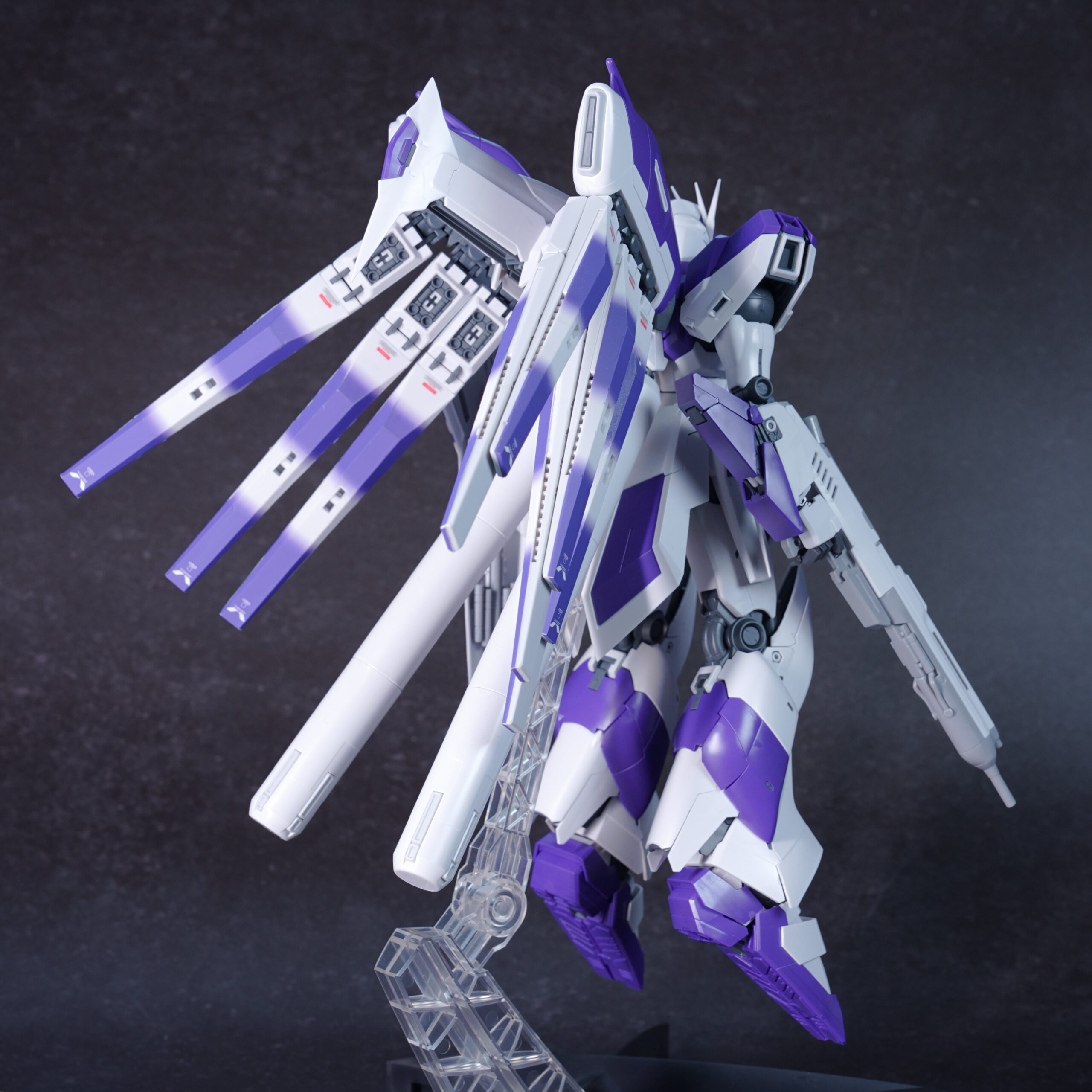
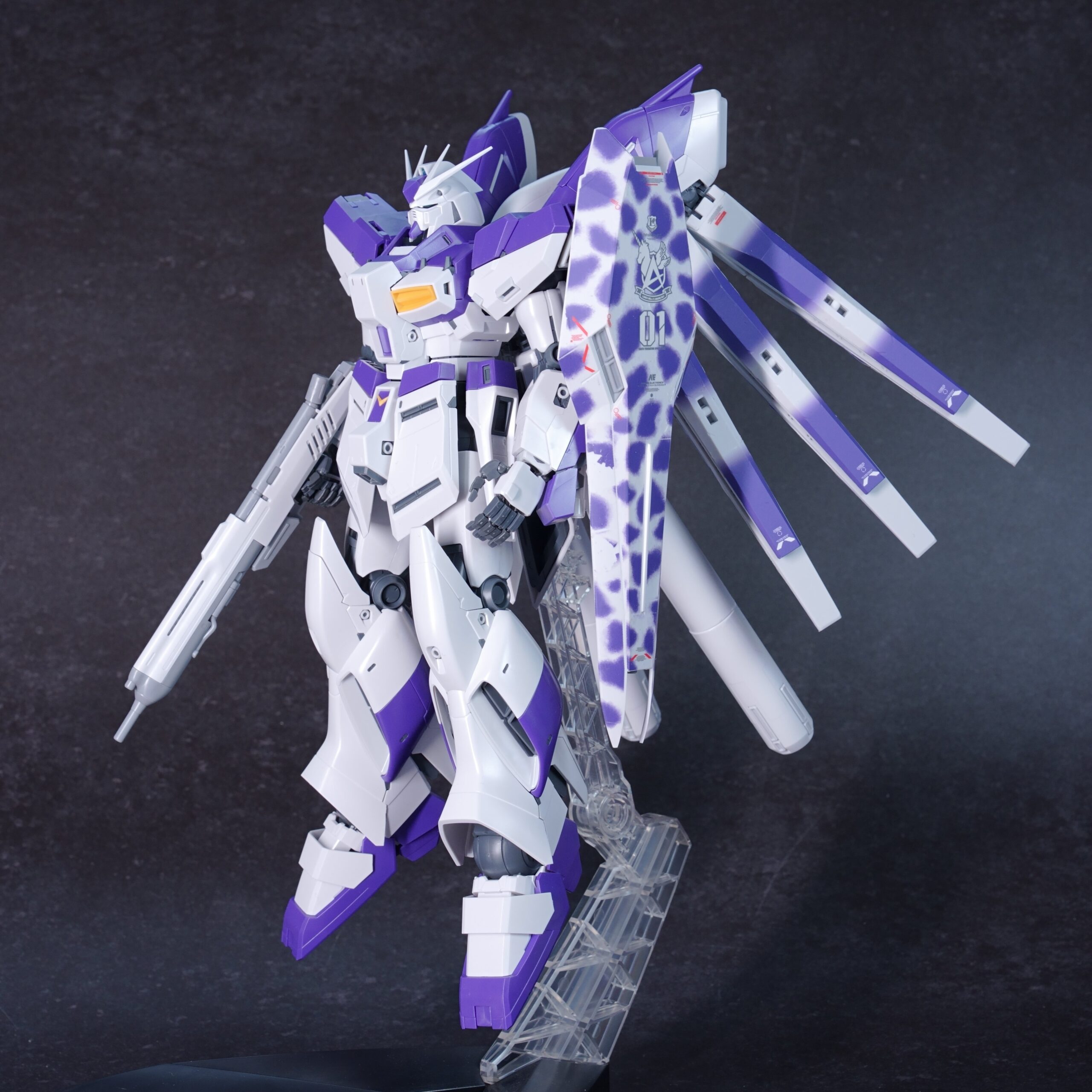
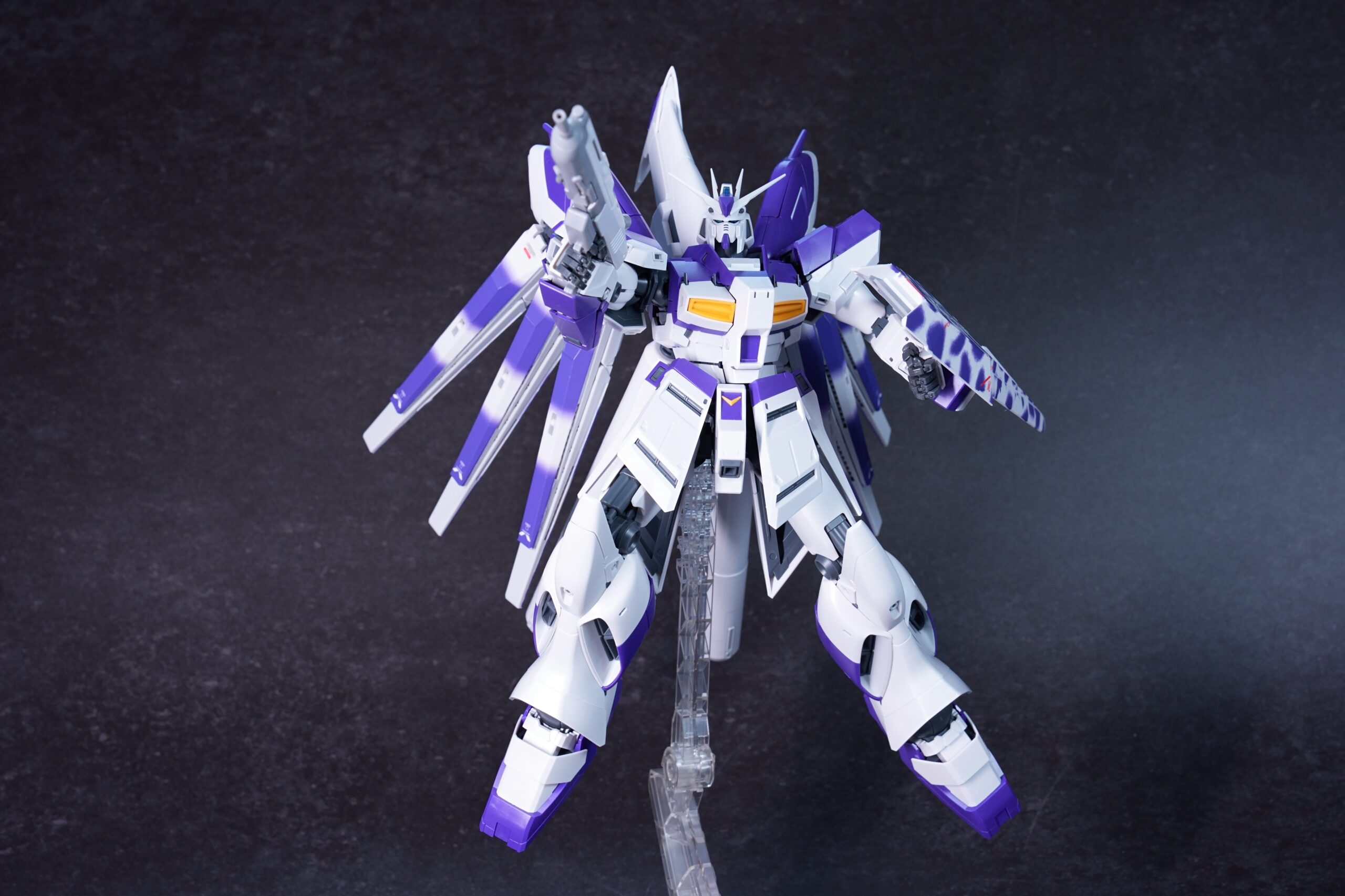
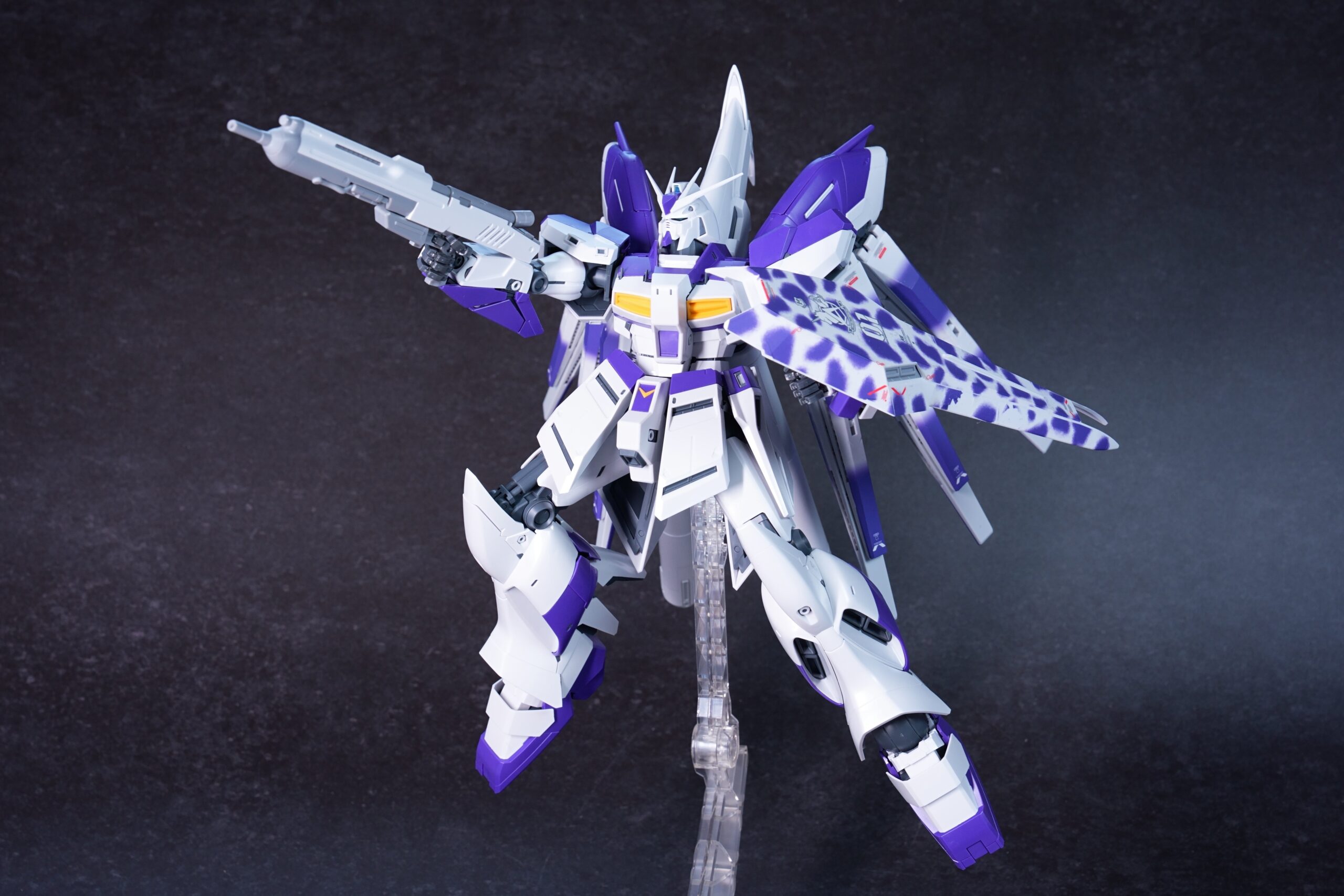
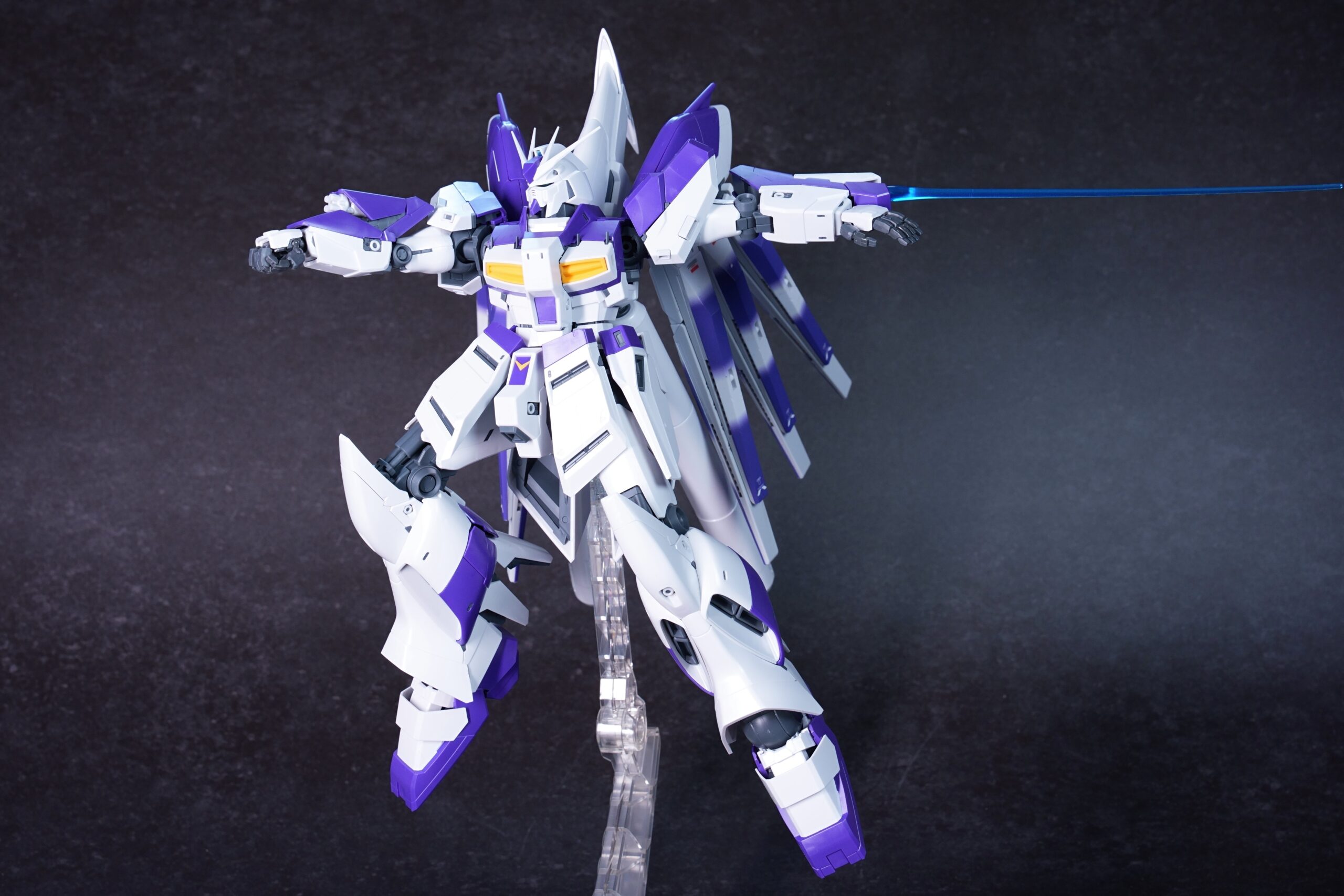
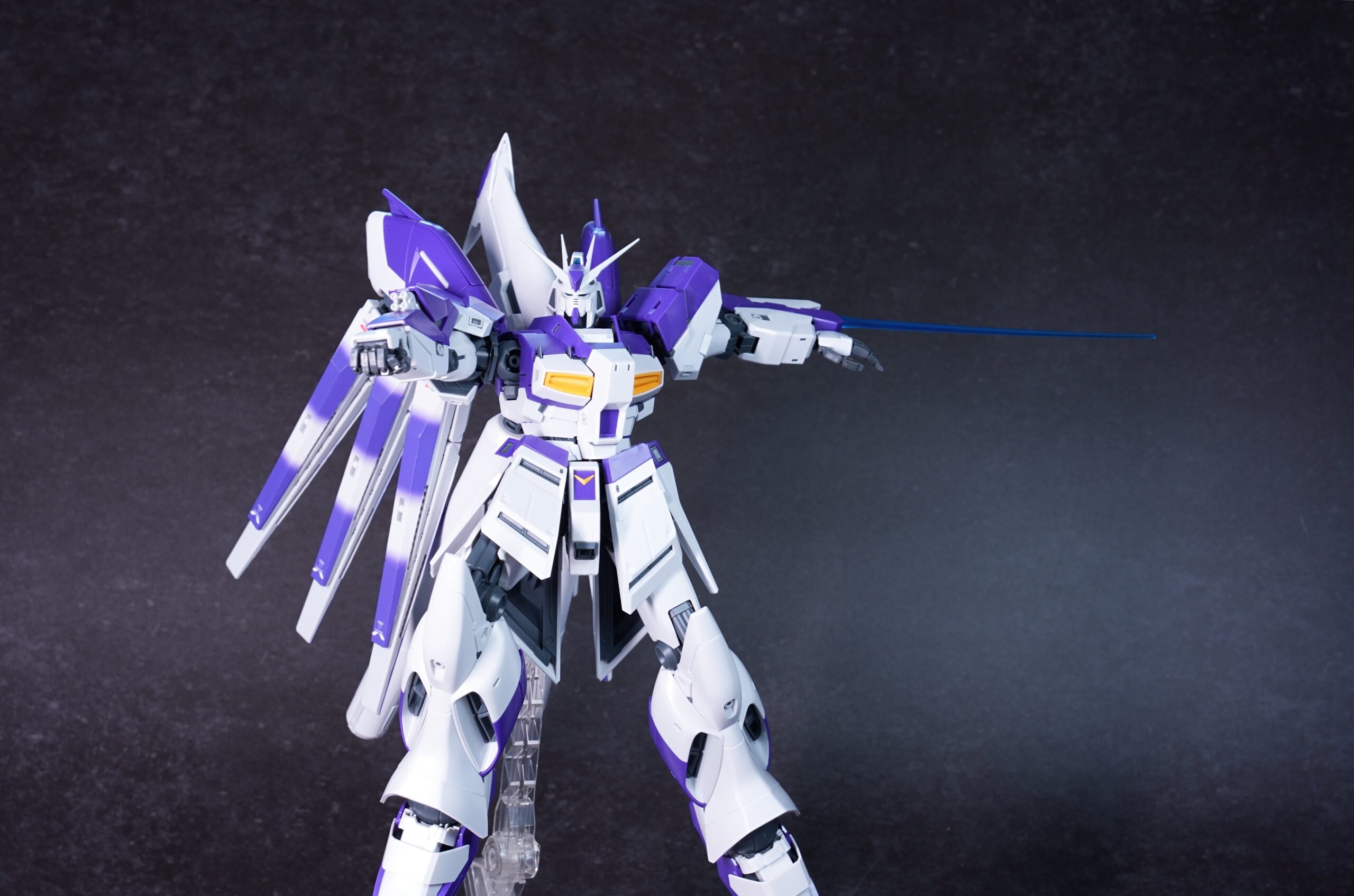
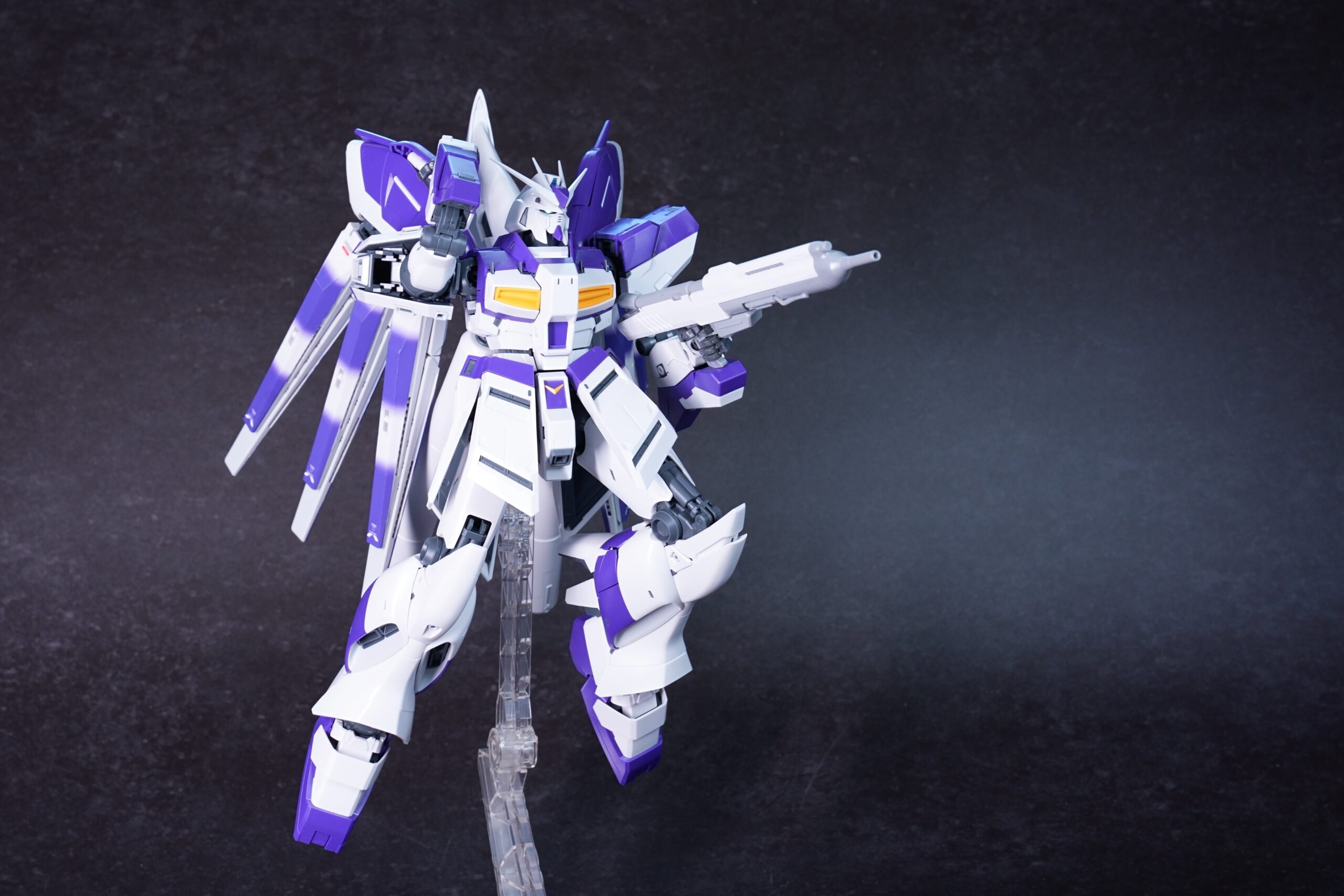
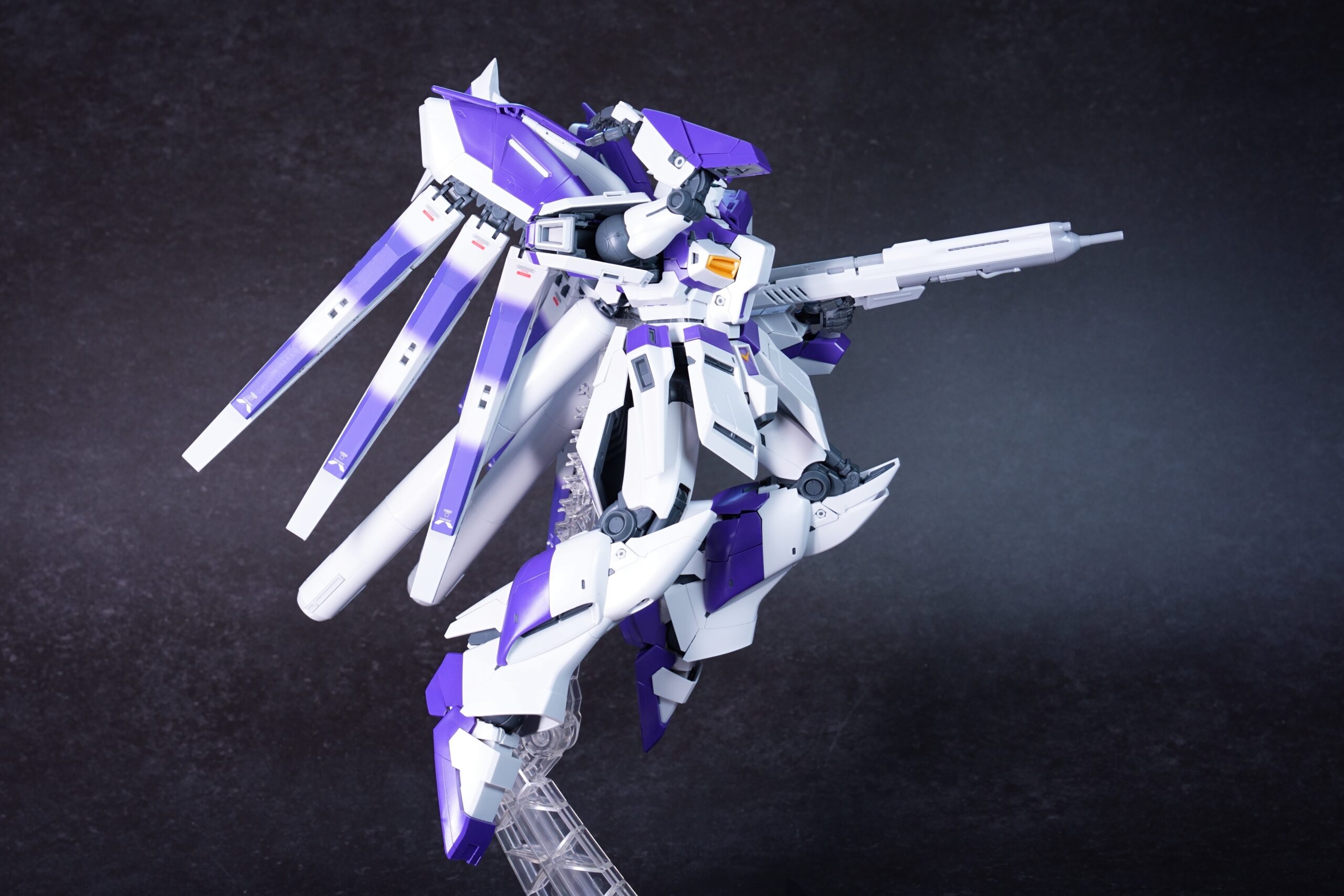
Once finished, the first thing that catches the eye is the volume of the lower body. The thick, firmly planted legs create that Ver.Ka-style power, and there’s plenty of presence in the standing pose alone. At roughly 22 cm tall, it’s a size with real presence even within 1/100 scale. Color separation is good even as an unpainted straight build, so it holds up for display straight from the molded colors. Since the clear red of the psycho-frame peeks through at key spots, it’s a nice touch that it rarely feels lacking in detail density even unpainted.
On articulation, thanks to the hidden arms in the forearms and the movable thrusters, it handles not just plain standing but also shooting poses and deployed staging. Because the backpack is large, actions that lean deeply forward require attention to the center of gravity, but the freedom for display is fairly high.
And the biggest set-piece is, of course, the display with all six funnels deployed. Scattering them front, back, left, and right using the stand instantly boosts the detail density and brings out the presence of a heavily armed machine from the show. Just changing the funnels’ orientation and height dramatically changes the impression, so this is a kit where the time spent trial-and-error arranging them is fun in itself. The included stand’s holding strength has the caveat noted earlier, but the look when it all comes together is exceptional.
6. Place in the Series ― Compared with Other Kits
Differences from the standard Nu Gundam Ver.Ka (2013): Even within the same Ver.Ka family, the Nu has no large propellant tanks and shows a neat, slim silhouette, whereas the Hi-Nu adds the tanks and funnel-deployment structure, making it larger and heavier. Against the Nu’s “well-balanced beauty,” the Hi-Nu’s appeal is “power that pushes with sheer mass.” Precisely because they share the same designer and brand, lining them up makes the difference in direction obvious.
Compared with the RG Hi-Nu Gundam: The RG version is compact at 1/144 yet dense, and doesn’t take up display space. The MG version, on the other hand, wins on the volume that leverages 1/100 size and on the sense of scale when the funnels are deployed. If you want display satisfaction, the MG; if you want to enjoy density in a small footprint, the RG — that’s how they divide. Even for the same machine, changing the size shifts whether it leans toward “impact” or “convenience.”
Compared even with older HG/MG kits, this one strikes a high level of balance between detail density and articulation, letting you experience the completeness of the Ver.Ka brand. It answers the needs of a first Ver.Ka, or of picking “one definitive Char’s Counterattack kit.” Placing it next to the HGUC 1/144 Hi-Nu Gundam makes the difference in size and density clear, and comparing it with the MG Double Zeta Gundam Ver.Ka from the same Ver.Ka brand reveals the shared threads in Katoki’s design philosophy.
7. One Tip for a Cleaner Finish
This build was straight and unpainted, but for those who want to add one more step, here are finishes that pair well (general recommendations).
- Panel lining: Just adding gray or black lining to the panel lines greatly boosts the definition of the massive armor. It’s the single most cost-effective step.
- Decal alternatives: For the funnel decals that lift easily, replacing them with masking or partial brush painting instead of forcing them on removes any worry of peeling.
- Gate cleanup: The clear psycho-frame whitens easily, so double-cut with nippers and finish by trimming with a hobby knife or file to keep marks inconspicuous.
- Top coat: A thin flat top coat suppresses the sheen of the molded colors and pulls the look together with a sense of density.
8. What to Check Before Buying
- The price is 8,140 yen (tax included) currently, which is a bit on the higher side among MGs. In return, the volume and included contents are substantial.
- Once finished it stands about 22 cm tall, and deploying the funnels spreads it wider still, so it’s reassuring to secure display space first.
- Because it’s rear-heavy, it’s basically suited to stand display. If you’re mainly planning plain standing poses, choose with that in mind.
- Applying all the decals takes time. It’s best to estimate the “time to build” and the “time to finish” separately.
9. Good & More
【🙆♀️ Good 🙆♂️】
- Overwhelming volume showcased by the legs. The standing pose alone conveys that Ver.Ka-style power.
- A funnel-deployment stand is included as standard. You can easily recreate the show’s look with all six deployed.
- Color separation is good even straight-built and unpainted, reaching display level in about two hours.
- LED unit compatibility, hidden arms, movable thrusters, and more — plenty of room to expand the fun.
【💁♀️ More (points of concern) 💁♂️】
- The funnel decals don’t match the sizing well and tend to lift and peel. Painted color separation is worth considering.
- The included stand’s arm is thin, so watch its holding strength and durability.
- Because it’s rear-heavy, it’s better suited to stand display than self-standing.
10. Score
11. Conclusion
This is a kit that balances volume and proportion at a high level, offering extremely high satisfaction when displayed. Even a straight build reaches a good-looking form in about two hours, and putting in a bit of extra effort on the decals and stand can raise the level of completion further. It’s the type where the “satisfaction of displaying and gazing at it” outweighs the fun of building, so it’s a piece I’d recommend for those who want to take their time finishing a precise model, and for anyone who wants a definitive Hi-Nu Gundam on hand.